A reading guide to this creator’s covered conversations.
The Shut It Off ASAP series by AsapSCIENCE investigates practical, first-principles engineering and environmental survival challenges across everyday resource domains.
The Shut It Off ASAP series by AsapSCIENCE investigates practical, first-principles engineering and environmental survival challenges across everyday resource domains. The episodes interrogate resource consumption—from global cooling infrastructure and digital streaming footprints to domestic water harvesting and caloric foraging. By combining scientific experiments with DIY prototypes, the creators break down complex electrochemical and thermodynamic mechanisms into tangible home applications. Across these investigations, the show scrutinizes industrial systemic impacts, evaluating how individual habits intersect with massive global crises like climate change and plastic pollution.
Thermodynamic Efficiency and Low-Energy Cooling Solutions
Global cooling practices like air conditioning drive significant carbon emissions, prompting alternative physical interventions like white roofs that increase solar reflectance.
Targeted physiological cooling mechanisms, such as arm immersion or dietary thermoregulation via spicy foods, lower core body temperatures without high energy demands.
Inspired by the Namib beetle, structural dew towers extract substantial volumes of moisture from humid air in arid environments without rainfall.
Residential rooftop systems capture thousands of liters of rainwater annually, offering viable decentralized alternatives to alleviate municipal water grid strain.
Alternative Energy Generation and Microbial Systems
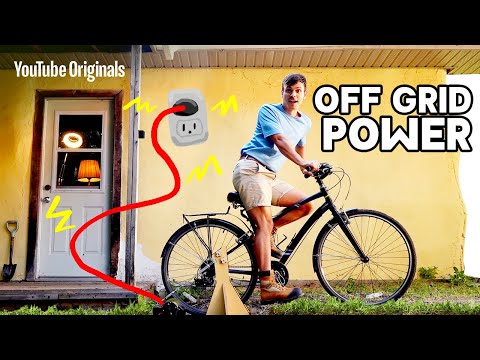
Bicycle generators successfully translate human kinetic pedaling into stable electrical currents using Faraday's law of induction and voltage regulation.
Microbial fuel cells harness anaerobic bacteria to break down nutrients in human urine, though stacking multiple units is required to achieve practical voltages.
Sustainable Food Production and Ecological Agriculture
Aquaponic systems integrate fish farming with hydroponics, utilizing filtered waste as a closed-loop nutrient source for plant cultivation.
Regenerative practices like mobile chicken coops and no-till methods protect soil microbial structures, turning land into carbon sinks while avoiding erosion.
Industrial Pollutant Footprints and Material Sustainability
Digital streaming infrastructure generates massive carbon dioxide emissions from server cooling demands, leading companies to relocate facilities to cold climates like Iceland.
Synthetic textiles and industrial chemical dyes introduce widespread microplastic and toxic chemical pollution into wastewater ecosystems, contrasting with natural alternatives.
Practical Self-Sufficiency Confronts Thermodynamic and Biological Limits
Foraging wild plants fails to sustain human caloric needs because gathering them expends more physical energy than the calories they provide.
Single microbial fuel cells and rudimentary urine setups produce negligible power, proving that scaling alternative energy requires complex electrochemical optimization rather than simple setups.
A small group of twenty meat and dairy corporations emits more greenhouse gases than entire developed nations while receiving substantial public funding.
Global cooling industries and digital server farms generate carbon footprints dwarfing standard consumer transport sectors, revealing that systemic infrastructural changes are essential.
Climate ChangeTextile Microplastic Pollution MechanicsNatural Versus Synthetic Textile Dyeing
THE CONVERSATIONS
Episode summaries
Browse covered conversations, newest original releases first.
Building An Underground Solar Powered Fridge | Shut It Off ASAPOct 26, 2021 · 21 min+
Facing intense heat waves and the high carbon footprint of conventional air conditioning, the hosts of AsapScience explore sustainable off-grid cooling alternatives. They test the solar reflectance of white roof paint, examine physiological heat mitigation strategies like arm immersion, and engineer a DIY solar-powered underground fridge utilizing Peltier thermoelectric modules and evaporative cooling.
Read episode summary Making Beer From Our Foot Microbes | Shut It Off ASAPOct 26, 2021 · 26 min+
Creators Mitch and Greg attempt to live off the grid by severing ties with modern conveniences like Wi-Fi, alcohol, and fast fashion while investigating their environmental footprints. Utilizing physics, biology, and traditional craftsmanship, they construct long-distance Yagi antennas from copper plates, culture wild yeast from fruit and skin microbes to brew artisanal beer, and shear live sheep to handcraft sustainable woolen swimwear using natural plant and insect dyes.
Read episode summary Harvesting Water Out Of Thin Air | Shut It Off ASAPOct 26, 2021 · 24 min+
When science creators Mitch and Greg of AsapSCIENCE have their municipal water and power shut off at an isolated rural farm, they embark on a hands-on experiment in survival and self-reliance. Facing looming global water scarcity crises, they construct a 10-meter-tall dew-harvesting tower inspired by the Namib beetle, install a rooftop rainwater catchment system, and filter natural stream water. The challenge highlights both the fragility of modern urban infrastructure and the practical utility of decentralized, nature-inspired water conservation technologies.
Read episode summary Generating All Our Electricity From Bike Power | Shut It Off ASAPOct 26, 2021 · 23 min+
Mitch and Greg from AsapSCIENCE disconnect from the electrical grid to test off-grid power generation methods, attempting to charge mobile phones using human urine via microbial fuel cells and powering cabin appliances through a custom bicycle generator rig. Through trial and error, they explore the electrochemical and mechanical realities of energy production, highlighting the strict physical trade-offs between voltage and current. The experiment underscores the immense energy demands of modern households and the critical role of diversified renewable and nuclear sources in addressing the global climate crisis.
Read episode summary Can We Forage All Our Calories From The Wild? | Shut It Off ASAPOct 26, 2021 · 27 min+
Attempting to survive entirely on wild foraging and sustainable farming, science creators Mitch and Greg from AsapSCIENCE explore the deep biological and ecological mechanics of human caloric intake. Moving off-grid without electricity or grocery access, they construct an aquaponic food system, harvest wild greens and poisonous berries with expert guidance, and experiment with unconventional protein sources like earthworms. Their journey highlights the delicate balance between modern agriculture, soil preservation, and the massive environmental footprint of global food systems.