About
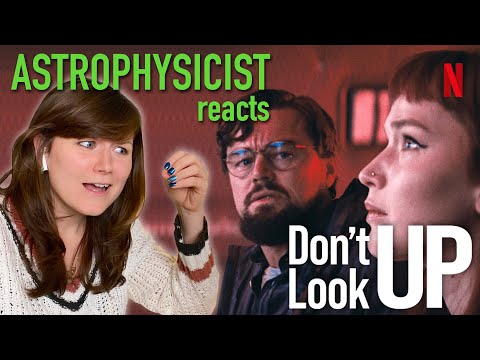
Dr. Becky bridges cinematic science fiction and rigorous astrophysics by evaluating the technical accuracy of depictions in media like Don't Look Up and Stargate SG-1. The episodes dissect complex phenomena ranging from adaptive optics and comet detection protocols to gravitational redshift, time dilation, and spaghettification near black holes. By contrasting Hollywood tropes with real-world mechanisms—such as the Subaru Telescope, FITS data formats, and DART kinetic impactors—the show explains how professional astronomy actually operates. Every breakdown grounds speculative narratives in empirical physics, observational techniques, and established space agency protocols without relying on generic exposition.
2 sources · 6 references
Dr. Becky · 3:52 Dr. Becky · 8:34 Dr. Becky · 17:07 Dr. Becky · 4:19 Dr. Becky · 10:55 Dr. Becky · 13:16Recurring themes
Observational Astronomy and Telescope Operations
- Professional telescope control rooms are physically separated from domes to prevent stray light from computer screens or equipment seals from bleeding into sensitive detectors.
- Astronomers utilize guide lasers paired with adaptive optics—functioning like noise-canceling headphones—to correct atmospheric blurring in real time.
1 source · 2 references
Dr. Becky · 1:43 Dr. Becky · 2:52Asteroid Detection and Planetary Defense Protocols
- Moving celestial objects are identified using rapid blink images or GIFs that alternate between past and recent observations, leveraging human visual perception.
- While NASA's Planetary Defense Coordination Office tracks near-Earth objects, major announcements are coordinated through the White House rather than agency-direct press releases.
1 source · 2 references
Dr. Becky · 4:56 Dr. Becky · 8:34Orbital Mechanics and Comet Behavior
- Long-period comets from the Oort cloud accelerate dramatically as they enter the inner solar system, making a six-month warning window consistent with the surprise discovery of comet NEOWISE in 2020.
- Approaching the Sun causes internal ice to sublimate, producing a dust tail pushed by solar radiation and an ion tail emitting ultraviolet-induced wavelengths.
1 source · 2 references
Dr. Becky · 9:51 Dr. Becky · 20:28Relativistic Physics and Extreme Gravity
- General relativistic time dilation means time passes more slowly closer to a massive object, a phenomenon verified by precise atomic clock discrepancies across altitudes.
- Intense differential gravitational pulls near a black hole generate tidal forces that stretch infalling objects into thread-like strands through spaghettification.
1 source · 2 references
Dr. Becky · 10:55 Dr. Becky · 13:16Theoretical Structures of Spacetime
- Black holes feature central singularities and event horizons demanding faster-than-light escape speeds, whereas wormholes act as bidirectional bridges without event horizons.
- Electromagnetic signals climbing out of deep gravitational wells experience gravitational redshift that lowers their detected frequency without altering the encoded digital data.
1 source · 2 references
Dr. Becky · 4:19 Dr. Becky · 6:42
Distinctive perspectives
Cinematic depictions of space threats and extreme physics are rigorously evaluated by mapping them against real space missions, data standards, and general relativity.
- Shows how fictional discovery telescopes and comet impact timelines match real-world analogs like the Subaru Telescope and comet NEOWISE.
- Contrasts movie tropes with real planetary defense options, such as testing kinetic impactors via NASA's DART mission rather than relying on unpredictable nuclear weapons.
- Bridges science fiction concepts like Stargate wormholes with actual relativistic principles like time dilation and gravitational redshift verified by atomic clocks.
2 sources · 5 references
Dr. Becky · 3:52 Dr. Becky · 9:51 Dr. Becky · 17:07 Dr. Becky · 6:42 Dr. Becky · 10:55Coverage style
Reacts to popular science fiction films and television episodes to examine their underlying scientific accuracy.
2 supporting episodes2 sources · 2 references
Dr. Becky · 3:52 Dr. Becky · 4:19Breaks down technical instrumentation details, such as FITS data headers and adaptive optics guide lasers.
1 supporting episodes1 source · 2 references
Dr. Becky · 2:52 Dr. Becky · 5:48Explains complex astrophysical concepts using clear analogies like comparing adaptive optics to noise-canceling headphones.
2 supporting episodes2 sources · 2 references
Dr. Becky · 2:52 Dr. Becky · 10:55Contrasts Hollywood exaggerations with actual protocols used by bodies like NASA's Planetary Defense Coordination Office.
1 supporting episodes