A reading guide to this creator’s covered conversations.
Driver61 delivers rigorous engineering breakdowns of motorsport and high-performance automotive design, dissecting everything from historical championship cars to bleeding-edge land speed vehicles.
Driver61 delivers rigorous engineering breakdowns of motorsport and high-performance automotive design, dissecting everything from historical championship cars to bleeding-edge land speed vehicles. The show focuses on first-principles mechanics, examining how aerodynamic forces, powertrain configurations, and component weight optimization dictate vehicle performance. By combining detailed computational fluid dynamics data, factory visits, and historical analysis, the creator demystifies complex engineering challenges faced by racing teams. Rather than relying on superficial race summaries, the episodes investigate the invisible physics and regulatory chess matches shaping elite motorsport.
Aerodynamic Innovation and Ground Effect Downforce Management
Traditional racing cars suffer severe downforce losses as speed drops, but specialized fan-driven systems and underbody vacuum seals generate constant downward suction regardless of vehicle velocity.
Regulatory shifts in Formula 1 force engineers to transition downforce contributions from turbulent front wings toward smoother, more efficient underbody floors that maintain performance in dirty air.
Unrestricted aerodynamic experiments demonstrate that mounting wings directly to suspension components or implementing active diffusers can radically stabilize cornering without sacrificing mechanical compliance.
Powertrain Architecture, Hybrid Mechanics, and Gearbox Engineering
High-rpm internal combustion engines rely on advanced pneumatic valve systems and variable intake geometry to operate safely and efficiently at extreme rotational speeds.
Electric and hybrid powertrains eliminate traditional multi-speed gearboxes or leverage complex epicyclic dual-motor gearboxes to blend kinetic energy recovery with constant torque delivery.
Rule-free engine design analyses reveal that V12 and turbocharged configurations achieve massive power density, though ultimate track performance remains bottlenecked by tire grip and driver control.
Regulatory Navigation, Loopholes, and Competitive Adaptability
Innovative racing teams frequently exploit ambiguities in technical regulations to introduce unconventional mechanical advantages, such as Nissan's epicyclic flywheel setup in Formula E.
Governing bodies actively intervene with rule changes when specific teams achieve dominant efficiencies, swiftly neutralizing technological breakthroughs that threaten competitive parity.
Forward-looking engineering models anticipate upcoming regulation changes, highlighting how active aerodynamics and modified diffuser geometries will reshape racing dynamics.
Precision Component Manufacturing and Extreme Weight Optimization
Engine builders like Cosworth utilize advanced forging, oval piston profiling, and stringent defect inspections to maximize durability under high reciprocating loads.
F1 teams obsess over gram-level weight reductions, machining away massive portions of metal components to maintain ballast placement flexibility beneath minimum weight limits.
Specialized manufacturing processes, such as baking carbon-fiber preforms in methane-filled ovens over months, produce ultra-dense carbon-carbon brake discs capable of withstanding extreme thermal stress.
Rigorous First-Principles Engineering Over Superficial Race Narratives
The show consistently prioritizes deep technical examinations of hardware, software simulations, and aerodynamic modeling over standard race-weekend gossip or driver drama.
Explanations break down complex physical phenomena—such as transonic shockwaves, valve float, and vacuum sealing—using concrete engineering data and factory demonstrations.
The Inextricable Tension Between Innovation and Regulatory Control
Episodes frequently highlight how brilliant engineering breakthroughs, such as Nissan's flywheel motor or historical fan cars, are ultimately checked or banned by governing bodies to preserve competitive parity.
Teams must continually balance aggressive performance enhancements against structural failure risks and regulatory clampdowns, demonstrating that rule enforcement is as influential as mechanical design.
Factory and Laboratory Deep Dives examining internal manufacturing processes like piston forging, carbon-carbon brake baking, and component weight reduction.
Computational Fluid Dynamics and Simulation Analysis utilizing advanced aerodynamic modeling to evaluate how future regulations and vehicle architectures alter airflow.
Historical and Rule-Free Case Studies exploring legendary machines—such as the Chaparral series, Porsche 919 Evo, and unrestrained V12 engines—to understand extreme automotive engineering limits.
Forensic Teardowns of Banned or Exotic Cars dissecting unique mechanical achievements like the McMurtry Spéirling fan car and Nissan's dual-motor Formula E racer.
Browse covered conversations, newest original releases first.
The Insane Engineering of the World's Fastest CarSep 10, 2026 · 27 min+
Engineered by a tiny British startup, the McMurtry Spéirling shatters traditional automotive performance limits by replacing conventional aerodynamic wings with twin electric fans that generate a constant two tons of downforce. By artificially evacuating the air beneath a sealed, narrow chassis, atmospheric pressure pins the car to the road regardless of vehicle speed. This video explores how the vehicle achieves a 0-to-60 mph time of 1.4 seconds, outperforming Formula 1 cars on tight circuits while remaining surprisingly accessible to amateur drivers.
When Nissan engineers discovered a regulatory loophole permitting a twin-motor setup in Formula E, they designed an epicyclic gearbox and a high-speed flywheel motor capable of spinning at 100,000 RPM in a vacuum to bypass energy and power caps. Despite dominating qualifying and achieving an 8/10ths-of-a-second-per-lap advantage through complex lap-time optimization with Canopy Simulations, the car suffered from early reliability and drivability issues in races before ultimately being banned by the FIA.
Read episode summary Rebuilding The Greatest F1 Car Ever Made (with Ferrari)Nov 14, 2025 · 40 min+
Exploring the engineering and operational mastery behind the legendary Ferrari F2004, this video details how a stable core team, unlimited track testing, and meticulous weight reduction created one of the most dominant cars in Formula 1 history. Featuring insights from former Ferrari engineer Filippo Perucchini, the discussion covers everything from the 865-horsepower V10 engine to Michael Schumacher’s peerless development feedback. Ultimately, the conversation highlights how regulatory shifts and cost caps made the conditions that produced the F2004 a relic of the past.
Read episode summary Why F1’s 2026 Cars Are Already a Big ProblemNov 5, 2025 · 20 min+
Former F1 engineer Adrian Villar examines the technical and aerodynamic implications of Formula 1's upcoming 2026 regulations using computational fluid dynamics simulations. The conversation explores how shifting downforce from the front wing to the floor, introducing active aerodynamics on both wings, and redesigning the diffuser and rear wing aim to reduce turbulent wake and improve close-quarters racing.
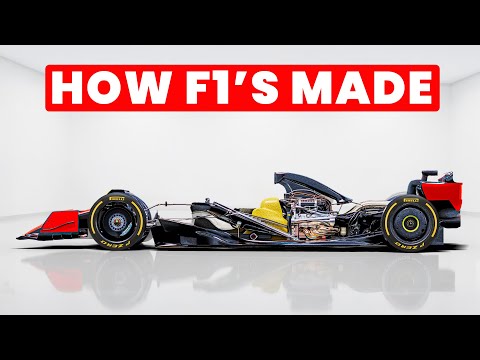
Formula 1 teams spend millions engineering elite race cars where every gram, micron, and millisecond dictates victory. This documentary goes inside the factories of Cosworth, Alpine, Brembo, and TDF to examine the extreme engineering behind vital components. From 20,000 RPM pistons and 3D-printed titanium gearboxes to carbon-carbon brakes and complex suspension setups, discover how manufacturers build machines that operate at the absolute limits of physics under brutal mechanical and aerodynamic loads.
Read episode summary How Formula 1 Pistons Are Made (I went to the factory)Aug 30, 2024 · 23 min+
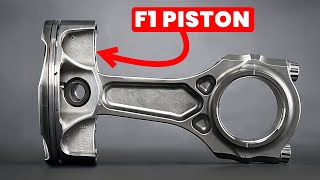
A single Formula 1 piston can cost over £50,000 to develop and manufacture, reflecting extreme engineering precision. This video takes viewers inside Cosworth's factory to trace a piston's lifecycle from initial Siemens NX design and metal forging to high-precision 5-axis CNC machining, rigorous crack testing, and aggressive dyno validation. Along the way, the piece highlights how microscopic tolerances, oval skirt profiling, and custom DLC coatings enable these components to survive extreme 20,000 RPM environments.
Removing all regulatory constraints on Formula 1 engines reveals what extreme engineering looks like when unburdened by displacement or configuration caps. By examining historical failures like turbine-powered Lotuses and W12s alongside expert design principles from Red Bull Powertrains, the discussion explores how a rule-free V12 with turbocharging and metal matrix composites could easily generate thousands of horsepower. Ultimately, the investigation highlights that physical limits like tire grip and packaging, rather than engine capability, dictate the true boundaries of motorsport performance.
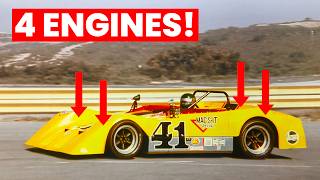
The Canadian-American Challenge Cup (Can-Am) series of 1966 to 1974 operated with virtually no rules regarding engine size, weight, or aerodynamics, sparking radical engineering breakthroughs like direct-mounted wings, fan-driven ground effect suction, and quad-engine layouts. The video examines these legendary machines—built by innovators like Jim Hall and manufacturers like Porsche and McLaren—and details the technical mechanisms behind their unprecedented speeds before rising costs and regulatory bans led to the series' demise.
When Porsche decided to strip all racing regulations off its Le Mans-winning 919 Hybrid, the resulting car shattered legendary lap records at Spa and the Nürburgring while outpacing modern Formula 1 cars. In an interview with technical project lead Stephen Mitas, this video unpacks the intense engineering trade-offs required to build the 919 Evo on a tight budget and under twelve months. From running 44 psi tire pressures to prevent structural collapse under extreme aerodynamic loads to inventing active front diffuser flaps, the project demonstrates how removing rulebook constraints tests the physical limits of both machine and material.
Rosco McGlashan is attempting to break the 1,000 mph land speed record with his rocket-powered vehicle, the Aussie Invader 5R. The conversation explores the history of land speed records and the extreme engineering challenges involved, such as maintaining stability through transonic shockwaves and managing massive G-force deceleration. The episode highlights the iterative design process, emphasizing custom solutions for fuel delivery, structural integrity, and driver safety required to push the boundaries of land-based vehicle performance.