A reading guide to this creator’s covered conversations.
The podcast Fall of Civilizations investigates the complex, systemic factors leading to the collapse of major historical empires and societies across antiquity and the medieval era.
The podcast Fall of Civilizations investigates the complex, systemic factors leading to the collapse of major historical empires and societies across antiquity and the medieval era. Rather than relying on simplistic great-man theories, the narrative examines how ecological dependencies, climate shifts, and economic vulnerabilities slowly erode imperial stability from within. Through detailed case studies ranging from ancient Egypt and Carthage to the Inca, Bagan, and Byzantium, the episodes contextualize monumental archaeological ruins within broader socioeconomic frameworks. The show systematically deconstructs political corruption, administrative overextension, and religious tax exemptions as critical catalysts for state dissolution. Ultimately, the coverage highlights how deeply human societies are bound to environmental regularity and internal political cohesion.
Ancient societies like Egypt and Bagan relied heavily on specific hydrological and geographical conditions, such as predictable Nile flooding and dual rice harvests, making them acutely vulnerable to prolonged droughts and climate anomalies.
Extreme geographical settings, such as rugged Andean mountain zones or arid Deccan plateaus, required intensive human adaptation through agricultural terracing, complex irrigation networks, and genetic crop diversity.
Paleoclimatic shifts, including megadroughts in northern Iraq during the late Assyrian period, strained agricultural productivity and forced costly transitions to resource-intensive irrigation strategies.
Structural Governance Flaws and Internal Political Fractures
Carthaginian republican governance restricted top executive and military positions to wealthy elites who could self-fund, creating structural vulnerabilities and incentives for corruption.
Dynastic overextension, such as decades-long reigns and overpopulated royal families like Egypt's old king problem, empowered regional governors and triggered succession crises that fractured centralized states.
Economic drains caused by massive tax-exempt religious estates, such as those accumulating up to 63 percent of Bagan's land, starved royal treasuries of revenue and crippled military management.
Military Evolution, Technological Shifts, and Foreign Pressures
Imperial powers continuously adapted their military structures, transitioning from seasonal peasant conscripts to professionalized iron armies in Assyria or incorporating foreign cavalry mercenaries and matchlock musketeers in Vijayanagara.
External technological innovations, such as Hyksos spoked-wheel chariots and composite bows or Ottoman bronze cannons like Basilica, shattered traditional defensive lines and brought down long-standing imperial capitals.
Overreliance on foreign mercenaries without stable funding created acute command friction and dangerous military rebellions, as demonstrated by Carthage's Mercenary War following treasury failures.
Centralized Socioeconomic Organization and Resource Distribution
The Inca Empire operated a centrally planned economy without private property or traditional markets, utilizing state-provisioned resources alongside citizen labor obligations known as mit’a.
Strategic imperial management included the construction of fortified storehouses, or qullqas, filled with freeze-dried foods and tools to project power and stabilize populations during times of crisis.
Unlike decentralized feudal systems, the Byzantine Empire maintained direct provincial tax collection and centrally paid administrative officials, allowing non-nobles to rise through the ranks.
Structural systemic collapse over individual agency
The episodes explicitly reject the 19th-century 'great man' theory, arguing through the Inca and Assyrian cases that historical outcomes are driven by broad socio-economic and climatic pressures rather than individual figures alone.
Explanations of imperial downfalls consistently focus on deep structural weaknesses, such as administrative overreach, economic stagnation, and climatic disruptions, rather than isolated tactical failures.
The critical role of environmental and agricultural resilience in maintaining state survival
Across multiple civilizations like ancient Egypt, Bagan, and the Inca, narrative framing emphasizes how food production limits and environmental volatility dictate political longevity.
Episodes detail how ancient societies deployed sophisticated adaptation methods, including terracing, complex irrigation, and genetic crop diversity, to buffer against harsh ecological extremes.
Comprehensive macro-historical case studies blending archaeological findings, paleoclimatic data, and primary textual sources to reconstruct the rise and fall of ancient and medieval empires.
Detailed examination of domestic economic structures, including tax exemptions, land distribution systems, and trade monopolies that underpinned imperial power.
Exploration of monumental architecture and urban engineering projects, ranging from monumental pyramids and stone-faced terraces to heavily fortified city walls.
Third Punic War siege and destruction of CarthageRoman naval adaptation and the Corvus boarding bridgePunic child sacrifice archaeological and textual debate
Shared coverage: ancient civilizations · historiography and historical perspective
THE CONVERSATIONS
Episode summaries
Browse covered conversations, newest original releases first.
18. Egypt - Fall of the PharaohsApr 30, 2024 · 238 min+
Spanning over three millennia of dynastic rule, Egypt's Nile Valley civilization rose from scattered river settlements to construct some of the most enduring architectural monuments in human history. Driven by the predictable flooding of the Nile and managed through an evolving bureaucratic apparatus, the civilization repeatedly navigated internal succession crises, devastating multi-century droughts, and foreign invasions by the Hyksos and Sea Peoples. Ultimately, structural economic exhaustion and foreign conquest by Assyrian, Persian, and Roman empires led to the permanent eclipse of native Pharaonic power and the loss of hieroglyphic literacy.
Read episode summary 17. Carthage - Empire of the PhoeniciansJun 18, 2023 · 219 min+
Paul Cooper's Fall of Civilizations podcast explores the meteoric rise and catastrophic destruction of Carthage, the North African empire founded by Phoenician refugees. The episode details how Carthage built a sprawling Mediterranean trade network, pioneered early financial and maritime systems, and clashed with Rome through the protracted Punic Wars before its ultimate razing in 146 BC.
Rising from the fertile Irrawaddy River valley in central Myanmar, the medieval Bagan Empire constructed thousands of magnificent Buddhist temples before collapsing under the weight of religious land accumulation and Mongol invasions. Paul Cooper explores how this civilization's unique agricultural prosperity and institutional tax exemptions sowed the seeds of its own demise, ultimately leaving behind an awe-inspiring archaeological landscape swallowed by the jungle.
Read episode summary 14. Vijayanagara - The Last Emperors of South IndiaApr 22, 2022 · 194 min+
The Fall of Civilizations Podcast chronicles the rise, golden age, and catastrophic collapse of the Vijayanagara Empire in Southern India. Established amid the chaos of collapsing northern sultanates, Vijayanagara emerged as a monumental stone metropolis and a vibrant hub of global trade, blending indigenous Hindu traditions with external military and cultural influences. However, persistent territorial conflicts over the Raichur Doab, imperial overreach, and the eventual unification of rival Deccan sultanates led to the devastating 1565 Battle of Talikota, the sacking of its capital, and its descent into a forgotten ghost town.
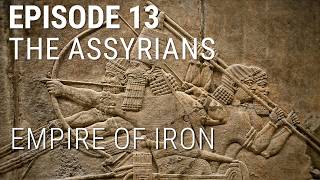
In 401 BC, 10,000 stranded Greek mercenaries encountered the massive, deserted ruins of Nineveh, a metropolis they failed to identify. This episode examines the Assyrian Empire, exploring its rise as the ancient world's first military superpower, its reliance on mass deportation and iron weaponry, and the systemic factors—including climate shifts, succession paranoia, and overextended military brutality—that led to its sudden, total collapse. The narrative traces the empire's evolution from an agrarian city-state to a dominant force and details the eventual coalition of rivals that erased it from power.
Read episode summary 12. The Inca - Cities in the Cloud (Part 2 of 2)Jul 31, 2021 · 95 min+
Francisco Pizarro’s conquest of the Inca Empire provides a striking case study on the intersection of individual ambition and systemic collapse. Despite the 'great man' narrative often applied to his life, Pizarro’s ascent from poverty to colonial power was enabled by a perfect storm of internal Inca political fragmentation, disease, and the systemic greed characterizing Spanish colonial expeditions. The episode tracks the transition from the initial discovery of the 'New World' to the systematic dismantling of Inca civilization and the eventual, ironic struggles of the conquistadors themselves to maintain control over their stolen territory.
Read episode summary 12. The Inca - Cities in the Cloud (Part 1 of 2)Jul 25, 2021 · 108 min+
Paul Cooper explores the rise, agricultural innovations, and administrative machinery of the Inca Empire, tracing how they conquered the extreme Andean landscape and created South America's largest pre-Columbian civilization. The narrative details their sophisticated terrace farming, extensive road networks, and centrally planned economy, while highlighting how epidemic diseases and a brutal civil war fractured their society on the eve of Spanish contact.
Read episode summary 11. Byzantium - Last of the Romans (Part 2 of 2)Feb 6, 2021 · 107 min+
Tracing the final centuries of the Byzantine Empire, this episode explores the dazzling cosmopolitanism, advanced bureaucracy, and monumental defenses of Constantinople before detailing its gradual collapse. From the devastating 1071 defeat at Manzikert and the catastrophic sack by the Fourth Crusade in 1204 to the ultimate 1453 conquest by Mehmed II using the giant cannon Basilica, the narrative highlights how the empire's preservation and subsequent dispersion of classical texts ultimately helped spark the Italian Renaissance.
Read episode summary 11. Byzantium - Last of the Romans (Part 1 of 2)Jan 31, 2021 · 100 min+
This episode explores the thousand-year survival of the Byzantine Empire, tracing how Constantinople endured as the eastern anchor of Rome while the Western Roman Empire collapsed into ruin. Paul Cooper examines the dramatic geological forces that shaped the Mediterranean basin, the construction of the formidable Theodosian walls driven by civic competition among chariot-racing factions, and the empire's desperate defense against invading forces using industrial espionage and naval innovations like Greek Fire.