About
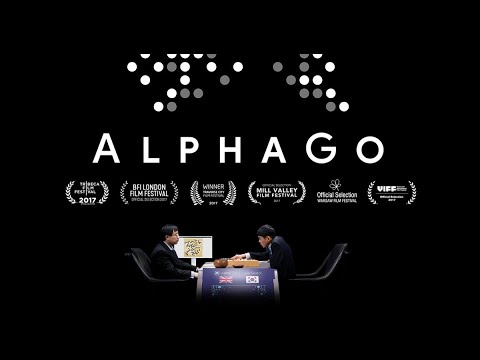
Google DeepMind's programming documents the trajectory of artificial intelligence research from foundational reinforcement learning milestones to practical real-world deployments. Across retrospectives on systems like AlphaGo and deep dives into contemporary breakthroughs in weather forecasting, protein watermarking, and autonomous driving, the episodes interrogate the engineering mechanics behind modern machine learning. Industry leaders and researchers unpack technical tradeoffs, such as the tension between brute-force calculation and statistical neural approximations. The content balances celebration of algorithmic breakthroughs with rigorous examinations of cybersecurity risks, verification frameworks, and safety guardrails. Ultimately, the show provides an insider lens on how theoretical computer science translates into operational systems reshaping science, infrastructure, and society.
5 sources · 5 references
Google DeepMind · 6:40 Google DeepMind · 16:15 Google DeepMind · 6:14 Google DeepMind · 19:10 Google DeepMind · 0:00Recurring themes
Tabula Rasa Reinforcement Learning and Self-Play
- Agents like AlphaZero bypass human knowledge ceilings by learning exclusively through self-play rules, discovering non-intuitive strategies that surpass centuries of human expertise.
- Raw pixel inputs enable end-to-end learning in dynamic environments, demonstrated when Atari models independently discovered wall-tunneling strategies without pre-programmed rules.
3 sources · 4 references
Google DeepMind · 27:58 Google DeepMind · 20:42 Google DeepMind · 9:35 Google DeepMind · 1:57Statistical Weather Modeling Over Traditional Physics Equations
- Modern meteorological models replace step-by-step fluid dynamics approximations with multi-layered neural networks trained on decades of historical atmospheric records.
- Global simultaneous evaluation captures wide-area atmospheric coupling, allowing systems like GraphCast and GenCast to track entire storm systems and predict rapid intensification with high confidence.
2 sources · 4 references
Google DeepMind · 16:15 Google DeepMind · 20:18 Google DeepMind · 22:06 Google DeepMind · 26:55Verification Architectures and Autonomous Safety Frameworks
- Pairing generative models with automated verifiers and test harnesses helps prune hallucinations and test mathematical or code outputs against hard criteria.
- Projects like Big Sleep leverage large language models with agentic harnesses to autonomously discover zero-day software vulnerabilities before malicious actors exploit them.
3 sources · 3 references
Google DeepMind · 41:43 Google DeepMind · 37:13 Google DeepMind · 24:07Multimodal Sensor Fusion and Closed-Loop Autonomous Systems
- Autonomous driving platforms like Waymo merge cameras, LiDAR, and radar streams to build robust scene representations that prevent single-point hardware failures.
- Closed-loop simulation environments test autonomous behaviors across billions of miles, feeding environmental feedback loops to prevent error compounding.
1 source · 3 references
Google DeepMind · 6:14 Google DeepMind · 13:28 Google DeepMind · 16:23Biological Simulation and Watermarking Verification
- AlphaFold solved the 50-year-old protein folding problem by predicting pairwise distance matrices and torsion angles rather than performing exhaustive physical searches.
- SynthID Bio applies watermarking to biology by altering atomic positions and swapping equivalent amino acids to track synthetic protein sequences while preserving binding affinity.
3 sources · 4 references
Google DeepMind · 49:41 Google DeepMind · 1:14:09 Google DeepMind · 19:41 Google DeepMind · 27:12
Distinctive perspectives
Demis Hassabis argues that raw compute scaling alone is insufficient for achieving artificial general intelligence, maintaining that half of research efforts must be dedicated to core architectural breakthroughs.
- Reasoning: Current language models exhibit uneven reasoning spikes, solving PhD-level math while failing basic logic or counting tasks.
- Evidence: Shane Legg notes that resolving bottlenecks like continual learning requires specialized memory retrieval systems rather than mere data volume increases.
2 sources · 3 references
Google DeepMind · 0:00 Google DeepMind · 5:26 Google DeepMind · 5:48Coverage style
Combines retrospective documentary storytelling on historical milestones like AlphaGo with technical deep dives into cutting-edge applications like weather prediction and watermarking.
3 supporting episodes3 sources · 3 references
Google DeepMind · 9:35 Google DeepMind · 16:15 Google DeepMind · 10:09Features direct contributions and formal lectures from leading research executives, including Demis Hassabis, Shane Legg, and Zubin Ghahramani, explaining core theoretical principles.
3 supporting episodes3 sources · 3 references
Google DeepMind · 0:00 Google DeepMind · 1:47 Google DeepMind · 7:38Pairs conceptual AI theory with tangible industry applications, examining how autonomous robotics, cybersecurity architectures, and life sciences simulations operate in production.
3 supporting episodes3 sources · 3 references
Google DeepMind · 6:14 Google DeepMind · 8:55 Google DeepMind · 1:14:09Incorporates detailed technical breakdowns of algorithmic bottlenecks, such as combinatorial explosion in board games and error accumulation in simulation environments.
2 supporting episodes2 sources · 2 references
Google DeepMind · 8:12 Google DeepMind · 16:23Recent emphasis
Earlier episodes from 2020 focus heavily on foundational game milestones, closed-board reinforcement learning, and academic lectures introducing core machine learning concepts.
2 supporting episodes2 sources · 2 references
Google DeepMind · 5:09 Google DeepMind · 47:15Material from late 2025 and 2026 pivots toward production-grade deployments, safety frameworks, autonomous agent security, biological watermarking, and real-time weather forecasting.
3 supporting episodes3 sources · 3 references
Google DeepMind · 19:41 Google DeepMind · 1:25 Google DeepMind · 37:13How this show’s focus has evolved
Early programming examined controlled, turn-based environments like Go and chess where self-play reinforcement learning first proved superior to human intuition.
2 sources · 2 references
Google DeepMind · 27:58 Google DeepMind · 25:17Mid-period episodes expanded into complex spatial domains and biological simulation, successfully tackling continuous physical constraints like protein folding structures.
2 sources · 2 references
Google DeepMind · 1:14:09 Google DeepMind · 49:41Recent 2025-2026 episodes extend focus to open-world operational systems, real-time meteorological forecasting, cyber-defense agent harnesses, and mathematical watermarking frameworks.