A reading guide to this creator’s covered conversations.
Great Art Explained delivers rigorous, deep-dive analyses of iconic Western masterpieces, dissecting the intersection of technical innovation, sociopolitical context, and artistic ambition.
Symbolism of Bosch Tree Man · Emerging1 episodes · 11%
Single-point perspective in Renaissance art · Emerging1 episodes · 11%
Renaissance to Baroque Sculpture Evolution · Emerging1 episodes · 11%
Renaissance theatrical design and painting · Emerging1 episodes · 11%
Psychological characterization in religious painting · Emerging1 episodes · 11%
ABOUT THIS CREATOR
About
Great Art Explained delivers rigorous, deep-dive analyses of iconic Western masterpieces, dissecting the intersection of technical innovation, sociopolitical context, and artistic ambition. Across episodes covering legendary works from Leonardo da Vinci to Hans Holbein, the show uncovers hidden compositional geometries, experimental mediums, and complex patronage dynamics. By examining both the physical creation of these pieces—such as undercoats, perspective lines, and sculptural techniques—and the turbulent political landscapes of their creators, the series reveals how art functioned as both public propaganda and private reflection. The episodes emphasize how master artists navigated social hierarchies, royal courts, and religious upheavals to elevate their craft and subvert traditional conventions.
Artists frequently pushed beyond traditional media constraints, such as Leonardo combining tempera and oil on dry plaster for The Last Supper or Velázquez utilizing a neutral grey grounding for Las Meninas.
Innovations in texture and optics, like Bernini using diverse chisels and drills to render soft flesh or Sargent applying thick impasto wet-on-wet in a single sitting, redefined physical realism.
Masterpieces were frequently commissioned during volatile historical moments, such as the Habsburg court funding opulent portraits like Las Meninas amid national bankruptcy to project dynastic stability.
Holbein used his outsider perspective at Henry VIII's court to navigate rival factions while encoding complex political and intellectual authorities into works like The Ambassadors.
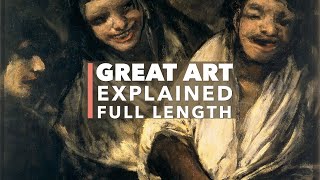
Goya created stark documentary works like 3rd of May 1808 and secret wall paintings to protest absolutist crackdowns and expose the brutal realities of war.
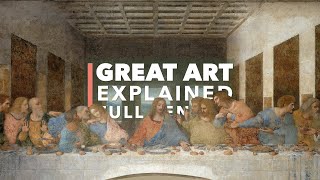
Complex visual narratives are anchored by precise architectural and mathematical frameworks, such as single-point perspective converging at Christ's temple in The Last Supper.
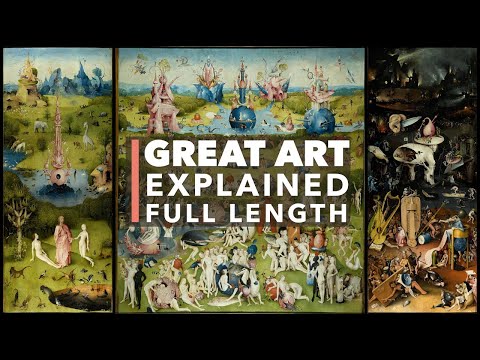
Bosch structured his triptych around a hidden unhatched egg at the center of the panels to establish a rigorous visual order across terrestrial and spiritual realms.
Velázquez unified the sprawling space of Las Meninas by anchoring the mathematical vanishing point precisely at the crook of a doorway figure's arm.
Creators deliberately broke centuries of convention, such as Leonardo omitting traditional halos from Christ and his disciples to emphasize raw human emotion.
Bernini replaced static Renaissance proportions with diagonal thrusts and deep chiaroscuro to capture split-second narrative climaxes in sculptures like David and Apollo and Daphne.
Sargent challenged rigid medical and high-society portrait conventions by portraying subjects in provocative poses and unconventional attire like crimson dressing gowns.
High Renaissance patrons like the Medici transformed painters from anonymous craftsmen into recognized individual geniuses, as seen in Raphael placing himself among history's great thinkers.
Velázquez spent decades pursuing royal chamberlain and gallery curator appointments to elevate his social status from a manual tradesperson to a noble knight of Santiago.
Artworks as Encoded Intellectual and Philosophical Statements
Portraits and frescoes functioned as encyclopedic records of human knowledge, with Holbein embedding scientific instruments and globes in The Ambassadors to represent intellectual authority.
Raphael split the composition of The School of Athens along a philosophical divide between Plato's idealism and Aristotle's empiricism, connecting classical Greek thought to Renaissance Rome.
Browse covered conversations, newest original releases first.
The Ambassadors: Great Art ExplainedSep 1, 2026 · 27 min+
Hans Holbein the Younger's 1533 masterpiece, The Ambassadors, captures two French diplomats embedded in the geopolitical and religious fractures surrounding Henry VIII's break with Rome. Through meticulous Northern Renaissance illusionism, Holbein encodes the painting with complex astronomical instruments, broken musical strings, and humanist objects that reflect a world coming apart. Ultimately anchored by a distorted anamorphic skull and a hidden crucifix, the double portrait serves as an intricate meditation on political ambition, human knowledge, and mortality.
Read episode summary The School of Athens by Raphael: Great Art ExplainedJul 18, 2025 · 24 min+
Raphael's masterpiece The School of Athens in the Vatican's Stanza della Segnatura serves as a profound visual synthesis of classical philosophy and Renaissance humanism. By staging ancient thinkers within grand Roman architecture, Raphael bridges faith and reason, idealist philosophy and empirical science. The video explores the painting's complex iconography, compositional mechanics, and the dramatic last-minute inclusion of his rival Michelangelo as the philosopher Heraclitus.
Read episode summary Great Art Explained: The Last Supper by Leonardo da VinciDec 21, 2024 · 36 min+
Leonardo da Vinci's The Last Supper breaks sharply with static religious traditions by treating a sacred narrative as an intense psychological drama. Painted in the refectory of Santa Maria delle Grazie between 1495 and 1498, the masterpiece fuses advanced single-point perspective, optical geometry, and theatrical staging principles. Leonardo's experimental decision to combine tempera and oil on dry plaster caused rapid deterioration, turning the surviving mural into a fragile ghost preserved primarily through contemporary copies and meticulous restoration efforts.
Read episode summary Great Art Explained: Las Meninas by Diego VelázquezJul 26, 2024 · 31 min+
Diego Velázquez's 1656 masterpiece *Las Meninas* stands as one of the most intellectually complex and scrutinized works in Western art history. This analysis explores how the Spanish court painter used illusion, perspective, and royal portraiture to elevate his professional status from a manual tradesperson to a noble. From the harsh financial realities of the Habsburg court to the intricate optics of the painting's mirrors and vanishing points, the discussion unpicks the multi-layered meanings embedded within the monumental canvas.
Read episode summary Great Art Explained: Bernini's Apollo and DaphneDec 1, 2023 · 30 min+
Child prodigy Gian Lorenzo Bernini dominated seventeenth-century Roman art by transforming rigid marble into dynamic, theatrically charged flesh and foliage. Through masterpieces like Apollo and Daphne and David, Bernini broke away from Renaissance equilibrium, pioneering deep undercutting and chiaroscuro techniques that captured fleeting, narrative-driven moments. Despite later centuries dismissing Baroque extravagance, modern art history restored Bernini's status as the quintessential universal genius of his age.
Read episode summary John Singer Sargent (Full Length): Madame X and Dr. PozziMay 19, 2023 · 33 min+
This episode examines the intertwined histories of John Singer Sargent's most notorious portraits, 'Dr. Pozzi at Home' and 'Madame X'. It explores how Sargent's revolutionary 'Alla Prima' painting technique and deliberate embrace of psychological intimacy challenged 19th-century Parisian and British sensibilities, sparking massive tabloid scandals that temporarily derailed his French commissions while cementing his enduring artistic legacy.
Francisco Goya, once a celebrated Spanish court painter, underwent a profound creative shift following a mysterious illness in 1792 that left him deaf and isolated. This transformation led him from capturing the light of the Spanish court to documenting the brutal realities of war and human cruelty in private. His later works, including the 'Black Paintings' and the 'Disasters of War,' reveal a deep pessimism, functioning as an unflinching mirror to the political turmoil and religious oppression of his era.
Read episode summary Mona Lisa (Full Length): Great Art ExplainedNov 4, 2021 · 33 min+
This examination of the Mona Lisa explores the intersection of Leonardo da Vinci’s scientific inquiry and artistic mastery. It details the technical innovations used to construct the portrait—such as sfumato, chiaroscuro, and layered glazing—while addressing the psychological and physiological mechanisms, such as visual perception, that render the painting’s famous smile enigmatic. The discussion also clarifies the historical identity of the subject and separates the painting's long-standing status as a masterpiece from the myths surrounding its 20th-century theft.
Read episode summary Hieronymus Bosch, The Garden of Earthly Delights (Full Length): Great Art ExplainedApr 16, 2021 · 51 min+
Hieronymus Bosch's masterpiece The Garden of Earthly Delights is frequently misread as a modern surrealist dream or secular fantasy, but historical and iconographic analysis reveals it to be a rigorously planned, deeply moralistic Christian work about sin and temptation. Commissioned by Henry III of Nassau, the triptych uses intricate visual metaphors, bestiary imagery, and theological symbolism to chart humanity's fall from Edenic creation into infernal punishment.