About
The Library of Congress programming presents deep-dive public lectures and author conversations examining historical currents across American culture, literature, and technology. The featured sessions connect archival scholarship with creators and historians, exploring how structural forces like property law, economic trade, and media technology shape public life. From examining 18th-century South Asian textile networks and early American genealogical frameworks to analyzing mid-century political figures and modern space exploration, the programming highlights granular historical documentation. Creators and public figures also reflect on long-term artistic resilience, analog workflows, and the mechanics of creative output across decades. By anchoring discussions in primary records and firsthand practitioner experiences, the series bridges academic rigor with accessible public discourse.
Recurring themes
Structural Mechanics of Legal and Property Systems
- Eighteenth-century British American record-keeping functioned primarily as a legal mechanism for managing estate inheritance, property authority, and lineage.
- English property law was deliberately adapted in the colonies to sustain the legal framework of maternal heritable slavery and racially segmented documentation.
Global Economic Networks and Commodity Trade
- Extensive domestic trade networks across 18th-century South Asia sourced specialized garments from diverse regional production hubs like Nagpur, Dacca, and Gujarat.
- Indian textile exports were fueled by massive silver inflows from American mines, supporting local coinage and low-value transactions across the subcontinent.
- Specific checked and striped cotton fabrics played a direct economic role in Atlantic commerce, purchasing roughly one-third of enslaved humans transported across the ocean.
Creative Longevity and Production Discipline
- Veteran creators maintain multi-decade outputs by avoiding forced storytelling and waiting for genuinely compelling ideas to preserve character freshness.
- Artists reject psychological writer's block by enforcing strict morning writing routines and treating creative output like disciplined manual labor.
- Adopting serialized storytelling formats helps creators overcome the intense pressure of continuous publishing deadlines without starting from scratch.
2 sources · 3 references
Library of Congress · 12:36 Library of Congress · 20:43 Library of Congress · 16:45Media Influence and Political Power Dynamics
- The 1954 Army-McCarthy hearings introduced live television broadcasting to millions of political viewers, launching figures like Roy Cohn into national prominence despite repeated perjury.
- Political operatives and fixers leveraged procedural delays, asset shielding, and aggressive counter-suits to evade federal oversight and build lasting influence in real estate and media.
- Wartime propaganda campaigns utilized iconic posters and recurring fictional characters to manage civilian anxiety and warn against careless speech.
Technological Constraints and Human Adaptation
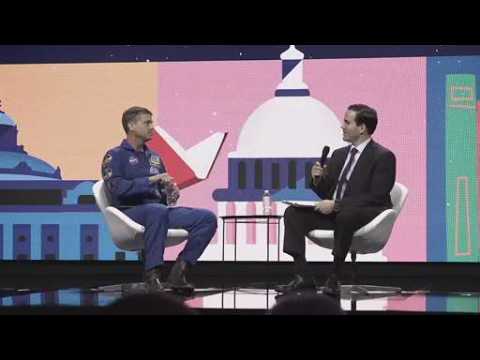
- Deep space missions require astronauts to adapt to extreme physical velocities, intense atmospheric re-entry friction, and close-quarters social norms.
- Artists and musicians deliberately employ analog workflows and physical media like cassette recorders and hardware store boards to combat screen fatigue.
2 sources · 4 references
Library of Congress · 26:12 Library of Congress · 43:50 Library of Congress · 27:10 Library of Congress · 30:16
Distinctive perspectives
Archival scholarship must examine historical mechanics through material and legal documentation rather than romanticized narratives.
- Historians demonstrate that early American genealogy functioned as an instrumental legal framework for property and estate distribution rather than a casual leisure pursuit.
- Economic analyses of textile trade ground global history in concrete supply chains, silver inflows, and labor divisions across continents.
Sustained creative work relies on structured physical routines and independence from major corporate gatekeepers.
- Independent musicians and cartoonists emphasize that career sustainability stems from direct distribution, pre-established relational trust, and unyielding daily writing disciplines.
- Creators deliberately bypass digital distractions and commercial pressures by adopting analog tools and maintaining long-term artistic integrity.
Coverage style
Features in-depth author conversations and public lectures that pair primary source archival research with contemporary cultural analysis.
2 supporting episodes2 sources · 2 references
Library of Congress · 0:37 Library of Congress · 10:16Incorporates direct testimony and retrospectives from long-standing practitioners in fields like cartooning, music, and space exploration.
3 supporting episodes3 sources · 3 references
Library of Congress · 12:36 Library of Congress · 19:49 Library of Congress · 17:20Examines granular historical material ranging from 18th-century court records and textile invoices to World War II propaganda posters.
3 supporting episodes