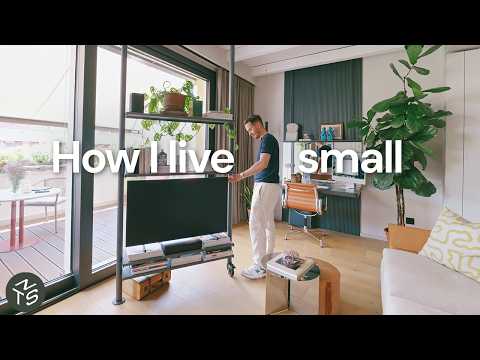
About
Never Too Small explores the ingenuity required to live and create within highly constrained spatial and lifestyle footprints. Across global urban centers like Tokyo, London, Milan, and Amsterdam, the series documents how architects, designers, and residents transform compact residences through bespoke joinery, multi-functional furniture, and clever zoning. Rather than treating small footprints as mere limitations, featured projects demonstrate that careful material integration and layout optimization can yield luxurious, highly functional environments. The coverage also extends into individual creative workflows, examining how artists sustain personal practices amidst demanding schedules. Ultimately, the show champions resourceful problem-solving, turning architectural density and spatial limits into opportunities for thoughtful design.
5 sources · 5 references
NEVER TOO SMALL · 0:50 NEVER TOO SMALL · 2:53 NEVER TOO SMALL · 0:34 NEVER TOO SMALL · 15:18 NEVER TOO SMALL · 1:19Recurring themes
Spatial Flow and Circulation Optimization
- Architects and residents eliminate rigid interior walls and traditional hallways, deploying modular box structures or circular pocket-door layouts to ensure smooth, simultaneous movement across compact floor plans.
- In narrow urban plots or older compartmentalized apartments, layout redesigns focus on maximizing cross-ventilation, natural light penetration, and unobstructed sightlines to exterior windows.
3 sources · 4 references
NEVER TOO SMALL · 2:53 NEVER TOO SMALL · 5:35 NEVER TOO SMALL · 0:34 NEVER TOO SMALL · 42:25Multi-Functional and Custom Joinery Solutions
- Custom-built elements such as rotating multi-functional bookshelves, sliding television mounts, and shallow front-hanging wardrobes maximize utility without permanently blocking sightlines or floor space.
- Residents frequently take on DIY joinery or modify standard prefabricated components—like raising kitchen floor levels for gravity drainage or adjusting counter heights—to achieve ergonomic and tailored living spaces.
Dynamic Climate and Functional Zoning
- Flexible textile partitions, such as U-shaped sheer curtains and dual-layer bedroom enclosures, allow residents to rapidly zone open-plan areas while regulating indoor temperatures and lighting schedules.
- In damp urban environments like London, active moisture management through mechanical dehumidifiers, window-mounted extractors, and cross-ventilation preserves built-in joinery and prevents structural mold.
3 sources · 3 references
NEVER TOO SMALL · 4:23 NEVER TOO SMALL · 20:11 NEVER TOO SMALL · 11:28Sustainable Material Economy and Resourcefulness
- Homeowners leverage second-hand designer furniture purchases to acquire high-end pieces with stable resale value while absorbing initial market depreciation.
- Self-made renovations and custom-built home additions, such as indoor-constructed floating canal decks, accumulate profound personal meaning and long-term value for their creators compared to mass-produced items.
2 sources · 3 references
NEVER TOO SMALL · 15:16 NEVER TOO SMALL · 4:48 NEVER TOO SMALL · 17:13
Distinctive perspectives
Spatial Constraints as Catalysts for Luxury and Innovation
- Designer Simone Mongini applies eight years of five-star London hotel experience to a 45-square-meter Milan apartment, treating every element as an integrated holiday suite to achieve luxury without a large footprint.
- In Tokyo apartments, architects integrate modular wet areas and prefabricated standard unit baths paired with custom acoustic boards to deliver tailored, high-end aesthetics while maintaining strict cost efficiency.
2 sources · 3 references
NEVER TOO SMALL · 0:50 NEVER TOO SMALL · 0:34 NEVER TOO SMALL · 18:19Self-Directed Fabrication Fosters Deep Emotional Connection and Cost Control
- London homeowners saved substantial renovation costs by performing their own custom joinery and underfloor heating installation, utilizing a unified timber batch for visual continuity across rooms.
- Amsterdam resident Koen notes that self-made items accumulate personal meaning and become increasingly valuable through long-term interaction and problem-solving, reversing the depreciation curve of purchased goods.
2 sources · 2 references
NEVER TOO SMALL · 6:41 NEVER TOO SMALL · 4:48Coverage style
Detailed On-Site Architectural Walkthroughs
2 supporting episodes2 sources · 3 references
NEVER TOO SMALL · 0:50 NEVER TOO SMALL · 22:10 NEVER TOO SMALL · 0:34Resident-Led Technical Explanations
2 supporting episodes2 sources · 3 references
NEVER TOO SMALL · 6:41 NEVER TOO SMALL · 9:14 NEVER TOO SMALL · 15:15Broad Thematic Compilations
1 supporting episodes1 source · 3 references
NEVER TOO SMALL · 1:19 NEVER TOO SMALL · 14:21 NEVER TOO SMALL · 50:34Creative Lifestyle Profiling
1 supporting episodes