About
PBS Space Time delivers rigorous, visually detailed explorations of advanced astrophysics, quantum mechanics, and cosmology for curious audiences. The episodes dissect complex mathematical artifacts and physical anomalies—such as the ubiquitous -1/12 value in physics, vacuum polarization around magnetars, and neutrino astronomy—by breaking them down into fundamental thermodynamic and geometric principles. Rather than relying on superficial summaries, the show walks viewers through historical paradoxes, theoretical models, and the specific observational constraints used to test them. It frequently contrasts competing theoretical frameworks, such as cosmic inflation versus the ekpyrotic model or various interpretations of quantum mechanics, emphasizing where mathematical models break down or require empirical validation. Through detailed examinations of cutting-edge instruments and data sets, the series bridges abstract theoretical physics with tangible, testable physical phenomena across the universe.
4 sources · 4 references
PBS Space Time · 1:34 PBS Space Time · 2:46 PBS Space Time · 56:00 PBS Space Time · 6:50Recurring themes
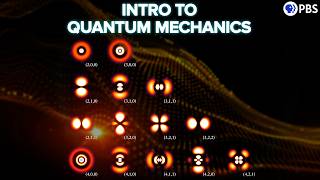
Probing the Deep Realities and Paradoxes of Quantum Mechanics
- Episodes examine foundational quantum phenomena like wave-particle duality and tunneling, demonstrating how statistical probability distributions govern physical states and radioactive decay.
- The show contrasts major interpretive frameworks—including the Copenhagen interpretation, many-worlds multiverse, pilot wave theory, and Bell inequality violations—without declaring a single definitive winner.
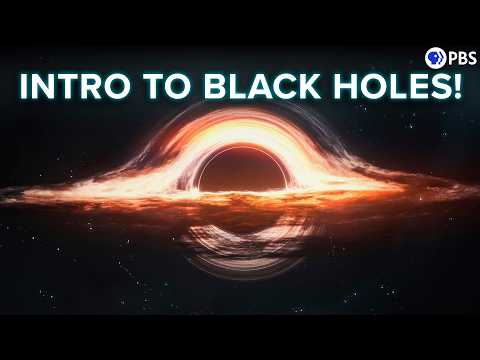
Unpacking the Mechanics and Astrophysical Signatures of Black Holes
- The series explores how stellar collapse bypasses neutron degeneracy pressure to form event horizons, altering radial and temporal coordinates inside the boundary.
- Discussions connect black hole thermodynamics, such as Beckenstein entropy proportional to horizon surface area, with broader holographic principles and Hawking radiation.
1 source · 4 references
PBS Space Time · 3:30 PBS Space Time · 48:20 PBS Space Time · 1:14:40 PBS Space Time · 1:27:30Challenging Standard Cosmology Through Alternative Origin Models
- The programs evaluate standard Big Bang challenges like the horizon and flatness problems, assessing how cosmic inflation or cyclic ekpyrotic bounce models resolve them.
- Alternative hypotheses, such as the timescape model suggesting variable time flow in cosmic voids mimics dark energy, are weighed against observational survey data.
Navigating Mathematical Infinities and Regularization in Physics
- The show demystifies mathematical divergences in physics, explaining how zeta-regularization extracts finite values like minus one-twelfth from divergent sums for physical calculations.
- Mathematical consistency requirements, such as normal-ordering constants in string theory loops, are shown to strictly dictate physical realities like twenty-six dimensions.
1 source · 2 references
PBS Space Time · 2:46 PBS Space Time · 12:13Utilizing Innovative Detectors and Natural Laboratories for Discovery
- Episodes highlight how extreme natural environments—like magnetars exceeding 100 billion Tesla—allow astronomers to test quantum vacuum polarization and birefringence.
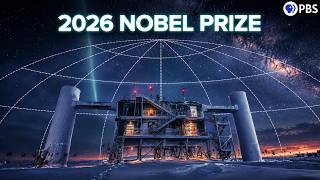
- Researchers leverage unique macro-detectors, ranging from Antarctic glacial ice for neutrino astronomy to spacecraft tracking data in Martian orbit, to hunt for primordial black holes and hidden particle accelerators.
Distinctive perspectives
Emphasis on Empirical Constraint Over Pure Mathematical Speculation
- The show frequently contrasts elegant theoretical constructs with the strict empirical limits required to validate them, highlighting where models face unobservable thresholds or data ambiguities.
- For instance, episodes examine how theories like supersymmetry, vacuum birefringence, or the timescape model encounter observational barriers, distinguishing between mathematically consistent frameworks and definitively proven physical realities.
3 sources · 3 references
PBS Space Time · 14:05 PBS Space Time · 11:42 PBS Space Time · 12:03Framing Physics Through Scale Transitions and Boundary Limits
- Content is consistently structured around extreme transitions, whether moving from subatomic symmetry and vacuum fluctuations to cosmic scales or examining event horizons and Kardashev energy thresholds.
- This framing emphasizes how mathematical breakdowns at extremes—such as ultraviolet catastrophes, fine-tuning hierarchy problems, or singularity thresholds—drive the evolution of modern physical theory.
4 sources · 4 references
PBS Space Time · 17:39 PBS Space Time · 10:00 PBS Space Time · 3:30 PBS Space Time · 0:28Coverage style
Detailed breakdown of historical scientific paradoxes and how classic thought experiments or mathematical tricks resolved them.
2 supporting episodes2 sources · 2 references
PBS Space Time · 17:39 PBS Space Time · 2:46Examination of bleeding-edge research papers and recent survey data, detailing specific measurements from instruments like IceCube, IXPE, and TESS.
3 supporting episodes3 sources · 3 references
PBS Space Time · 11:14 PBS Space Time · 11:00 PBS Space Time · 9:18Comprehensive exploration of theoretical physics machinery, explaining concepts like quantum field theory, Feynman diagrams, and Riemann zeta regularization with step-by-step logic.
3 supporting episodes3 sources · 3 references
PBS Space Time · 2:46 PBS Space Time · 7:21 PBS Space Time · 1:17Explicit framing of unresolved physical crises, highlighting fine-tuning problems, missing supersymmetric particles, and competing cosmological models without glossing over data tensions.
3 supporting episodes3 sources · 4 references
PBS Space Time · 10:00 PBS Space Time · 11:42 PBS Space Time · 12:03 PBS Space Time · 14:05Recent emphasis
Recent 2026 episodes feature a pronounced focus on direct observational breakthroughs and complex detector physics, highlighting neutrino telescopes, magnetar vacuum polarization, and precise exoplanet/dust dynamics.
3 supporting episodes3 sources · 3 references
PBS Space Time · 7:05 PBS Space Time · 11:00 PBS Space Time · 4:51Earlier 2024 to 2025 episodes concentrated more heavily on sweeping macro-scale cosmological models, energy civilizational scaling, and foundational theoretical crises like the Higgs fine-tuning problem.
3 supporting episodes