Industrial Air Pollution Control Technologies · Emerging1 episodes · 8%
Hydroelectric Dam Fish Passage Systems · Emerging1 episodes · 8%
ABOUT THIS CREATOR
About
Practical Engineering systematically unpacks the hidden physical realities and mechanical principles behind everyday civil and electrical infrastructure. The show examines complex engineering feats and catastrophic failures, from bridge collapses and dam vulnerabilities to electrical outlet standards and high-voltage transmission lines. By breaking down subsurface geology, material science, and regulatory oversight, the creator highlights the intricate trade-offs between cost, safety, and environmental constraints. Each episode bridges the gap between technical complexity and public understanding, revealing how human societies manage colossal physical risks.
Geotechnical Vulnerabilities and Subsurface Mechanics
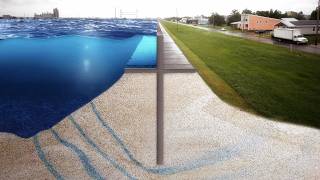
Water seepage and high subsurface pressure can dramatically reduce soil shear strength and trigger catastrophic structural collapse, as seen in New Orleans levees.
Soluble foundations like gypsum beneath dams create positive feedback loops of rock dissolution and increasing water flow over time.
Local geology dictates excavation techniques and stability in tunneling, where unsupported spans risk sudden cave-ins and surface sinkholes.
Material Degradation and Hidden Structural Failures
Uncoated or poorly grouted internal steel elements, such as tie-down rods and post-tensioned cables, suffer severe unobserved corrosion from water infiltration.
Weathering steel relies on protective oxide layers that fail when roadway drainage clogs, causing moisture and salt to pool in vulnerable joints.
Critical structural weaknesses are frequently masked by underestimated material wear, generalized corrosion assumptions, and inaccessible inspection points.
Standardized Safety Frameworks and Regulatory Logistics
Consensus organizations like NEMA establish uniform electrical connector standards to prevent market fragmentation and mitigate severe fire hazards.
Civil projects navigate complex legal and logistical boundaries, including subsurface property easements and strict environmental compliance.
Engineers design around high-consequence, low-probability risks by establishing statistical thresholds for vessel collisions and extreme weather events.
Environmental Adaptation and Energy Transmission Physics
High-voltage transmission lines rely primarily on air clearance distances rather than heavy rubberized insulation to prevent electrical arcing.
Large-scale water management projects, such as Dutch polders and storm surge barriers, require perpetual financial and engineering commitments against rising seas.
Smokestacks exploit natural thermal buoyancy and stack effect physics to drive exhaust gases upward without mechanical fans.
Infrastructure safety requires balancing economic feasibility against low-probability, high-consequence disasters.
Engineers explicitly design structures like bridge piers and storm barriers around acceptable annual probability thresholds rather than absolute worst-case scenarios because the latter are financially impossible.
While elevating coastal homes or building massive surge barriers involves heavy upfront capital costs, these investments are justified when weighed against the catastrophic economic destruction of inaction.
Browse covered conversations, newest original releases first.
Why Are There So Many Different Transmission Towers?Nov 17, 2026 · 23 min+
Transmission towers are critical, highly engineered components of the electrical grid often overlooked in daily life. This episode explores the engineering trade-offs behind these structures, focusing on how constraints like electrical arcing clearance, right-of-way land costs, and structural integrity dictate their design. It further examines how utility providers optimize existing capacity through strategies like dynamic line ratings and reconductoring to bypass the significant hurdles of building new infrastructure.
Exploring the unexpected complexity and historical evolution of North American electrical connections, this video breaks down the NEMA standard system. From ungrounded legacy outlets and polarity enforcement to dual-voltage appliance design and high-current industrial locking plugs, Grady Hillhouse examines the engineering tradeoffs, safety mechanisms, and practical constraints that shaped the electrical outlets found in homes and workplaces today.
Read episode summary The Mind-Blowing Flaw That Flooded New OrleansJul 7, 2026 · 25 min+
Hurricane Katrina's catastrophic flooding of New Orleans in August 2005 is frequently mischaracterized solely as a natural disaster, but the majority of the city's destruction stemmed from three specific levee and floodwall failures operating below design thresholds. Civil engineer Grady Hillhouse breaks down the physical and geotechnical mechanics behind these failures—including subsurface seepage, flawed soil strength assumptions, I-wall deflection, and marsh layer pressure blowouts—while examining how structural protection paradoxically drives long-term hazard creep and reshapes modern levee engineering.
Read episode summary Fixing the Most Dangerous Dam in the WorldMay 19, 2026 · 22 min+
Mosul Dam in northern Iraq, dubbed the most dangerous dam in the world by the US Army Corps of Engineers, has faced nonstop foundation dissolution since its 1980s construction due to soluble gypsum rock. The video details the decades-long engineering battle, early contracting failures, geopolitical disruptions including an ISIS takeover, and the 2016 multi-million-dollar Italian rehabilitation project that restored stability while highlighting the permanent maintenance commitment required for the structure.
Driven by a viral online trend of amateur hobby tunneling, civil engineer Grady Hillhouse explores the complex geotechnical and regulatory realities of underground construction. The video contrasts the romantic appeal of subterranean exploration with strict legal frameworks like three-dimensional land ownership, building codes, and permits, before breaking down core engineering challenges such as excavation stability, rock stand-up time, permanent supports, spoil logistics, water management, and ventilation.
Hurricane storm surges cause catastrophic coastal damage that far exceeds typical wind destruction. In this episode, Practical Engineering examines large-scale physical modeling at Oregon State University's wave research laboratory, where engineers test one-third scale houses to understand how minor elevation differences drastically improve hurricane survival. The discussion highlights the complex economic and policy trade-offs between upfront construction costs, housing affordability, and long-term flood resilience.
Smokestacks are not just relics of the 19th-century Industrial Revolution; they are precision engineering tools that exploit pressure differentials to disperse industrial pollutants. Grady from Practical Engineering explains how the stack effect, atmospheric stability, and fluid dynamics govern how factories manage air quality. Ultimately, designing a smokestack requires balancing thermodynamic efficiency, massive capital costs, and strict environmental regulations to protect public health.
Read episode summary This Bridge’s Bizarre Design Nearly Caused It To CollapseMar 18, 2025 · 20 min+
The sudden emergency closure and nearly complete demolition of the Washington Bridge in Providence, Rhode Island, expose systemic vulnerabilities in bridge design, inspection, and infrastructure maintenance. Built in 1930 and expanded in 1959 with a complex cantilever and prestressed concrete configuration, the bridge suffered from severe corrosion, hidden structural elements, and a lack of air entrainment in its aging concrete. A routine widening project uncovered catastrophic failures in tie-down rods and internal cables, triggering state lawsuits, federal investigations, and an extensive rebuilding effort that illustrates the severe risks of obscured structural components.
The Netherlands relies on centuries of pioneering civil engineering to defend its low-lying landscape against relentless flooding from the North Sea and major European rivers. Through iconic projects like the Afsluitdijk, the sprawling Delta Works, and innovative polder reclamations, Dutch engineers have continually reinvented coastline defense. While these massive waterworks require staggering financial investments and carry ecological tradeoffs, they demonstrate how proactive infrastructure planning remains essential for survival in a sinking delta.
Read episode summary 1.5 Years of Heavy Construction in 1.5 HoursOct 29, 2024 · 97 min+
This documentary tracks the construction of a wastewater lift station near San Antonio, Texas, detailing the engineering and logistical challenges of building critical civil infrastructure in a rapidly growing region. It explores the transition from raw site excavation and shoring to the installation of precast concrete wet wells, mechanical pumping systems, and redundant electrical controls. The episode illustrates the complex coordination required to expand utility capacity while maintaining service for existing developments and adhering to strict safety and regulatory standards.
Read episode summary This Bridge Should Have Been Closed Years Before It CollapsedJun 18, 2024 · 22 min+
On January 28, 2022, Pittsburgh's four-lane Fern Hollow Bridge collapsed without warning, injuring several motorists and exposing deep systemic failures in structural engineering oversight. A detailed NTSB post-mortem revealed that weathering steel corrosion, clogged drainage, misclassified tension members, and compounded errors in load ratings left the bridge functioning with a fraction of its assumed capacity for over a decade. The disaster highlights how institutional fragmentation and bureaucratic inaction can allow obvious public safety risks to persist unaddressed.
Read episode summary How Bridge Engineers Design Against Ship CollisionsMay 7, 2024 · 29 min+
Following the March 2024 collapse of the Francis Scott Key Bridge in Baltimore, civil engineering principles reveal how designers account for massive ship collisions. The discussion explores the mathematical and structural frameworks behind bridge safety codes, balancing extreme kinetic energy and economic feasibility through tools like annual failure probabilities, equivalent static loads, and pier protection devices.
Hydroelectric dams provide critical energy, flood control, and irrigation, but their immense infrastructure often disrupts vital aquatic ecosystems. Touring McNary Dam on the Columbia River alongside researchers from the Pacific Northwest National Laboratory reveals how modern engineering balances these competing demands. From elaborate fish ladders and juvenile bypass systems to electronic sensor fish and advanced turbine designs, the conversation explores the evolving science and technology deployed to protect migratory fish populations.