A reading guide to this creator’s covered conversations.
The B1M examines the intersection of civil engineering, project management, and urban history by dissecting major global infrastructure projects and construction methods.
The B1M examines the intersection of civil engineering, project management, and urban history by dissecting major global infrastructure projects and construction methods. The channel moves beyond surface-level aesthetics to evaluate how logistical decisions, contract models, and site constraints dictate the success or failure of complex builds. By analyzing case studies ranging from the operational choreography of Berlin’s Tempelhof Airport to the technical rigors of Norway’s subsea tunneling, the coverage emphasizes the systemic reliance on specialized hardware and digital integration. It frequently critiques traditional, fragmented construction practices, advocating instead for design-build models and industrialized manufacturing processes. The analysis rewards technical curiosity, detailing how engineering solutions interact with political, financial, and environmental realities.
Uses granular technical data—such as water pressure in bars, tonnage, and precise time intervals—to contextualize the difficulty of engineering challenges.
Recent content (2026) shifts focus to the real-world application of infrastructure management, such as the logistics of rail maintenance and the fiscal consequences of government oversight, compared to older theoretical discussions.
Current episodes prioritize technical hardware solutions—like custom gantry cranes and specialized grouting techniques—as the primary resolution to site-specific constraints.
The channel moved from advocacy for the theory and necessity of off-site manufacturing in 2019 to using those principles as a benchmark for evaluating active global mega-projects in 2026.
Coverage of innovation has matured from abstract calls for sector digitization to granular reporting on how specific firms integrate software and hardware to overcome physical constraints.
Early content focused on the potential for new construction paradigms, while recent 2026 content uses such efficiency as a litmus test for government competence in public infrastructure.
Browse covered conversations, newest original releases first.
Inside the World's Longest-Running Construction ProjectOct 22, 2026 · 28 min+
La Sagrada Familia's construction serves as a case study in multi-generational architectural project management, blending centuries-old geometric vision with modern structural innovations. By utilizing prestressed stone panels and a self-funding business model tied to visitor revenue, the project has successfully navigated over 140 years of historical disruption, though it continues to grapple with modern urban planning disputes.
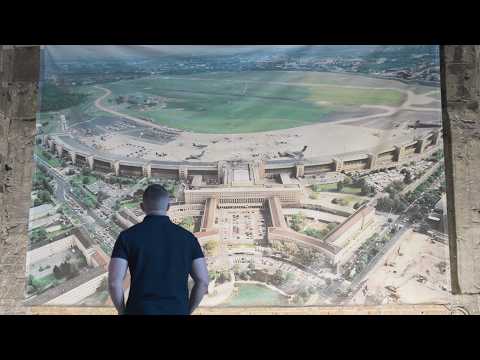
Built during the 1930s under the Nazi regime as a monumental gateway to the planned capital of Gerania, Berlin's Tempelhof Airport was engineered for intimidation and control on an unprecedented scale. Designed by Ernst Sagebiel using modular industrial components disguised by classical limestone, the facility later served as a wartime manufacturing center and a vital lifeline during the Berlin Airlift. Following its eventual closure, an overwhelming grassroots referendum transformed the sprawling airfield into the world's largest inner-city park, turning a monument of fascist power into a cherished public space.
Read episode summary America Actually Built Something On Time and On BudgetSep 30, 2026 · 23 min+
This episode explores the complex, high-stakes replacement of the 130-year-old Park Avenue Viaduct in New York City, a critical piece of rail infrastructure carrying hundreds of thousands of commuters daily. By utilizing a design-build contract structure, custom-engineered gantry machinery, and rigorous weekend-only construction cycles, the project team has managed to keep the line operational throughout the renovation. The project stands as a notable case study in infrastructure management, having reached milestones significantly ahead of schedule and under budget.
Read episode summary The £102BN Plan To Finish The World's Most Expensive RailwaySep 28, 2026 · 38 min+
The UK's High Speed 2 (HS2) railway project, originally conceived as a £32.7 billion investment to bridge the economic gap between London and the north, has become a cautionary tale in mega-project management, with costs spiraling toward £102.7 billion and the scope significantly reduced. This report analyzes the systemic failures—including premature project initiation, cost-plus contracting, and an approval process susceptible to expensive, unfunded objections—that stalled progress. While highlighting remarkable engineering feats, such as complex tunnel construction, the account details the recent administrative 'reset' aimed at regaining control, raising questions about whether the reduced infrastructure will ever deliver its intended economic dividends.
Read episode summary Can Britain's Houses of Parliament Be Saved?Aug 19, 2026 · 28 min+
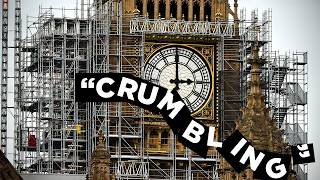
The Palace of Westminster faces severe structural decay, plumbing failures, asbestos contamination, and escalating maintenance costs that threaten Britain's seat of democracy. To address this crisis, authorities are weighing a massive multi-billion-pound restoration program, contrasting a disruptive full decant against a prolonged phased renovation.
Read episode summary Norway is Building The World's Deepest Mega-TunnelJun 3, 2026 · 30 min+
Norway is constructing the Rogfast Tunnel, a record-breaking 26.7-kilometer twin-bore subsea highway reaching 388 meters below the Boknafjord. Navigating unstable fractured rock and massive water pressure requires the specialized Norwegian drill-and-blast excavation method rather than standard Tunnel Boring Machines. The project features complex subterranean engineering feats, including multi-level underground roundabouts beneath the island of Kvitsoy and deep ventilation shafts to maintain air quality across the world's deepest road tunnel.
The Chrysler Building faces a severe financial crisis driven by an escalating, restrictive land lease agreement with Cooper Union and the high costs of modernizing a century-old, landmarked skyscraper. Despite its global iconic status, the building's market valuation has dropped from $800 million to $150 million as it struggles to attract competitive commercial tenants. Future viability likely depends on either a massive capital-intensive retrofitting project or a potential conversion into high-end residential units, following the path of other notable New York property adaptive reuses.
Saudi Arabia's ambitious 170-kilometer linear city project, known as The Line, faces immense engineering, financial, and logistical hurdles as it approaches its critical 2026 milestone. This analysis examines the massive foundational work, dewatering systems, custom mirror manufacturing, and transport network constraints required to build a desert metropolis inspired by cyberpunk science fiction, while weighing executive skepticism and financial realities.
Traditional construction relies on bespoke, in-situ prototyping that suffers from low productivity, severe skill shortages, and high vulnerability to environmental variables. To overcome these systemic bottlenecks, innovators are shifting toward off-site manufacturing approaches—spanning volumetric modules, panelized systems, and component-based platform kits. By moving production into controlled factory environments and integrating digital design with automation, the sector is attempting to balance industrial standardization with architectural flexibility.