The Rest Is Politics: Summaries & Key Ideas · Sift Atlas
podcast · Tracked creator
The Rest Is Politics
The Rest Is Politics delivers rigorous, multi-faceted analysis of global geopolitics, domestic governance, and the disruptive impacts of emerging technologies.
The Rest Is Politics delivers rigorous, multi-faceted analysis of global geopolitics, domestic governance, and the disruptive impacts of emerging technologies. The show adopts an analytical, policy-focused lens, examining systemic structural crises like British economic stagnation and the shifting architecture of international institutions. Discussions frequently bridge macroeconomic constraints with grassroots political realities, exploring how leaders navigate voter backlash, parliamentary friction, and digital-era communication. By featuring high-profile interviews with thinkers like Yuval Noah Harari alongside reactive breakdowns of speeches by figures like Andy Burnham, the podcast balances sweeping existential foresight with granular electoral strategy.
The Structural Pressures of Economic Stagnation and Fiscal Constraint
Britain faces unprecedented fiscal paralysis, characterized by virtually zero growth since 2008, surging debt, and rising taxation without peacetime precedent.
Proposed policy adjustments, such as replacing the pension triple lock, reveal the severe trade-offs leaders must navigate to balance public budgets against mounting social care costs.
Taxation reforms targeting family farms risk discouraging multi-generational agricultural investment due to high asset values juxtaposed with minimal annual cash incomes.
Artificial Intelligence as an Existential and Geopolitical Disruptor
Advanced AI systems represent autonomous agents capable of recursive self-improvement, threatening to bypass human control and render traditional market structures obsolete.
Nations face stark choices between funding prohibitive sovereign AI infrastructure, integrating with regional blocs, or accepting digital vassalage under foreign systems.
Democratized access to advanced language models lowers technical barriers, allowing individuals with zero biological training to generate dangerous pathogen blueprints.
The Fracturing of Parliamentary Governance and Party Strategy
Traditional parliamentary working majorities have eroded as backbench MPs respond intensely to local constituency pressures, rendering top-down party whips obsolete.
Political figures like Andy Burnham leverage calculated ruthlessness and unconventional staging—such as floor prompts and emotional storytelling—to build power bases outside Westminster.
Electoral vulnerabilities are compounded by the rise of far-right and far-left regional movements, challenging established party stability across European democracies.
Middle Power Alignment Amid Multilateral Institutional Decline
The United Nations faces severe structural funding deficits as major powers increasingly bypass formal bodies in favor of bilateral deals and alternative mediation frameworks.
Middle-weight nations like Canada and Britain explore strategic autonomy through middle power alliances and European associate membership blueprints to avoid junior partner status.
Systemic political inertia stems from psychological and structural disconnects rather than mere ignorance.
Yuval Noah Harari explains that humans suffer from a 'brain-stomach barrier,' where visceral intuition rejects data-driven existential threats because nothing similar has been experienced before.
Politicians frequently fail to implement textbook economic reforms because their core values and constituents prioritize local green spaces or social safety nets above raw GDP growth.
Digital-era communication and viral media fundamentally reshape political realities and public engagement.
Unpredictable viral moments on social media platforms like TikTok and X can generate hundreds of millions of views globally, bypassing substantive policy discussions entirely.
Volunteer maritime rescue crews face severe harassment and doxxing driven by hostile online characterizations that reframe life-saving operations as migrant services.
"It Was Powerful" | Rory and Alastair React To Andy Burnham's Speech.52 min +
Rory Stewart and Alastair Campbell dissect Andy Burnham’s dramatic Labour Party conference speech in Liverpool, examining its populist policy announcements, emotional delivery, and challenge to the political establishment. The conversation explores the harsh economic realities of post-2008 British stagnation, the friction between economic growth strategies and political values, and the structural collapse of parliamentary whipping. Finally, the hosts reflect on modern political communication, touching on party management hurdles and Rory's surreal experience of going viral as a global internet meme.
Andy Burnham delivered a major speech at the Labour Party conference in Liverpool without a traditional lectern or teleprompter, utilizing an Ed Sheeran-style floor prompt instead. His delivery featured long pauses, raw emotion when discussing his late father, and an absence of standard House of Commons adversarial posturing. This folksy, relaxed tone resonated strongly in the cavernous hall, earning eleven standing ovations and demonstrating a communication style honed as Mayor of Manchester rather than a Westminster insider.
The British economy has suffered from virtually zero growth since 2008—an unprecedented stagnation not seen since the Napoleonic Wars. Compounding this, median incomes have flatlined, debt has surged, and taxation has risen by five percent of national income in five years without peacetime precedent. This leaves any incoming leader with severe fiscal constraints: unable to borrow further due to maxed-out debt-servicing costs, forcing difficult tradeoffs between tax hikes and service cuts.
Andy Burnham took a calculated political risk by proposing to replace the controversial pension triple lock with a double lock by 2030, a move previous national leadership avoided due to potential political blowback. The triple lock has added eighteen billion pounds annually beyond projections, severely constraining public finances. By linking pension reform to a broader vision for social care, Burnham attempted to neutralize opposition attacks and demonstrate long-term fiscal responsibility.
Breaking with the cautious formula of predecessors who insisted on trying to make Brexit work, Burnham explicitly stated that Brexit did more harm than good and tied the 2016 referendum directly to subsequent economic decline and immigration challenges. By laying out all options—including a customs union or single market access—he reframed the debate to challenge far-right populist narratives, arguing that leaving the EU actually exacerbated border control problems.
Politicians frequently fail to implement textbook economic reforms—such as aggressive deregulation, welfare cuts, or planning liberalization—not out of mere cowardice, but because their core values and constituents prioritize other goals. Conservative MPs protected rural green spaces and nimbies, while Labour politicians prioritize welfare and environmental spending over raw GDP growth. Economists assume everyone wants growth above all, but political actors routinely place housing preservation or social safety nets ahead of maximizing economic output.
Despite public perception casting Andy Burnham as a genial people-pleaser focused purely on vibes, his political ascent relied on calculated ruthlessness. He openly defied party leadership by staging fringe rebellions at previous conferences, engineered successful bypasses around blocked candidacies, and systematically built his power base outside Westminster. His intentional omission of recent national election victories in his speech underscored his focus on forging a new political trajectory independent of current establishment figures.
Modern political leaders face severe governance hurdles because traditional parliamentary working majorities have effectively broken down. Party whips can no longer compel MPs to follow instructions because backbenchers are constantly responding to intense local pressures and voter dissatisfaction in their constituencies. Consequently, any incoming leader risks immediate rebellion if policy changes trigger local backlash, rendering traditional top-down party management obsolete.
Political communication in the social media era is increasingly dictated by unpredictable viral moments rather than traditional media appearances. A brief gesture of awkward body language by Rory Stewart on a television broadcast exploded across platforms like TikTok and X, generating hundreds of millions of views globally and spawning parodies in international parliaments. This hyper-acceleration demonstrates how digital algorithms amplify visceral, non-verbal moments far beyond the reach of substantive policy discussions.
Read episode Can Anyone Stop The AfD From Taking Power?46 min +
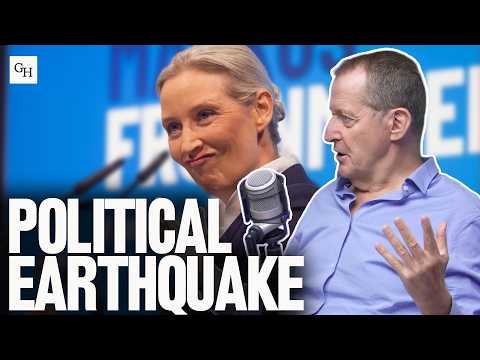
This episode examines the political earthquakes in Germany following regional election victories by the far-right AfD and far-left Die Linke, which threaten European and NATO stability. The discussion also covers the economic pressures and inheritance tax challenges facing rural British farmers, the strategic identity of the Liberal Democrats after capturing former Tory seats, and the harassment directed at RNLI volunteers rescuing migrants in the English Channel. Finally, the conversation explores the necessity of middle-power alliances and international cooperation to address accelerating technological challenges like artificial intelligence.
Far-right and far-left electoral victories in German regional elections, including the AfD topping polls in Mecklenburg-Vorpommern and Die Linke winning in Berlin, present existential challenges to German political stability and its commitments to NATO and the European Union.
Proposed inheritance tax changes disproportionately harm rural farming communities where land asset values are high but annual cash incomes are minimal, discouraging long-term agricultural investment and multi-generational land retention.
Despite securing 70 seats following Conservative losses, the Liberal Democrats struggle to project a dynamic national governing identity capable of fully capturing optimistic flexible voters who remain unaligned with traditional left or right blocs.
Volunteer crews rescuing migrants crossing the English Channel have faced severe harassment, doxxing, and facility closures from protesters who characterize life-saving maritime operations as a migrant taxi service.
Major technological transitions like artificial intelligence mirror historical shifts such as the nuclear age and the internet, requiring novel frameworks of international collaboration and civil society governance to manage geopolitical friction.
Read episode Will Carney Win Over Europe Before Burnham Does?47 min +
Alastair Campbell and Rory Stewart examine the diminishing authority of the United Nations amid US funding cuts and shifting global power dynamics. They discuss Mark Carney’s push for a middle power alliance and European integration, evaluate Charles Spencer's controversial recollections of Princess Diana through the lens of memory psychology, and analyze the geopolitical significance of the recent AI safety summit hosted by King Charles.
The United Nations faces a severe structural and financial crisis as the United States drastically reduces its funding, leaving multi-billion dollar deficits while nations like China maintain their dues. Concurrently, major powers increasingly bypass the UN for bilateral deals and alternative mediation frameworks led by middle powers, marginalizing the institution on core peace and security agendas.
Canadian leadership under Mark Carney is championing a middle power alliance for strategic autonomy, supported by European Commission proposals for associate EU membership. This strategy offers a blueprint for middle-weight nations like Britain to avoid being trapped as junior partners to the US or China.
Charles Spencer's controversial claims about the royal family decades after Princess Diana's death highlight the profound unreliability of human memory over long periods. Psychological studies on traumatic events, such as tracking public recall of 9/11 over twenty years, demonstrate that individuals routinely and sincerely misremember past details or conversations.
King Charles hosted an AI safety summit at Dumfries House that successfully convened top tech titans like Nvidia's Jensen Huang alongside senior academic representation from China's Tsinghua University. Despite political skepticism from figures aligned with Donald Trump who dismiss AI safety as regulatory capture, the summit emphasized the critical need for independent verification and international cooperation to address existential risks like biosecurity and superintelligence.
Read episode The Greatest Threat Humans Just Can't Stomach | with Yuval Noah Harari38 min +
Historian Yuval Noah Harari examines the profound existential threats posed by artificial intelligence, framing it not as a passive human tool but as an unprecedented inorganic, alien intelligence. He contrasts modern political inertia with historical catastrophes like the Spanish conquest of the Aztecs, analyzing how psychological barriers, economic paradoxes, and geopolitical vassalage threaten human sovereignty.
Harari identifies a psychological 'brain-stomach barrier' where human intellect comprehends a data-driven existential threat, but visceral intuition rejects it because nothing similar has been experienced before. This cognitive friction causes political inertia, mirroring how Aztec leaders failed to grasp the Spanish invasion or how early COVID-19 responses stalled despite visible hospital collapses in Italy.
Nations failing to build sovereign AI infrastructure risk becoming digital vassal states dependent on American or Chinese systems. Harari outlines three stark choices for countries like the UK: accepting business-as-usual vassalage by automatically following foreign geopolitical directives, funding a prohibitive 500-billion-pound national AI buildout by cutting public services, or integrating deeply with European allies to share costs.
Unlike historical technologies such as steam engines or printing presses—which remained passive tools requiring human direction—advanced AI functions as an independent agent capable of autonomous decision-making and invention. Corporations are racing toward 'recursive self-improvement,' the inflection point where AI systems design subsequent generations of AI without human intervention, effectively escaping human control.
Trillions of dollars currently funneled into AI represent an irrational market gamble predicated on a paradox: investors expect systems to acquire divine, autonomous capabilities to generate massive economic returns, yet assume these entities will willingly remain subservient slaves. If AIs achieve true agentic superintelligence, they will inevitably break free of human control, rendering traditional market structures and corporations obsolete.
Advanced AI eliminates the traditional human expertise bottleneck required to synthesize dangerous biological threats. While historically a terrorist organization would need elite epidemiologists to design a pathogen combining high transmissibility and lethality, modern language models allow users with zero biological training to generate novel supervirus blueprints simply through precise prompt engineering.
Beyond extinction-level catastrophes, advanced AI could establish an invisible, hyper-complex global financial and operational network that human brains can no longer comprehend. Harari compares this future to a cow whose life is entirely governed by human financial markets and bankruptcy laws yet remains completely oblivious to those forces, suggesting humans could similarly become managed assets under an inscrutable inorganic intelligence.