A reading guide to this creator’s covered conversations.
The Financial Times produces rigorous investigative documentary journalism examining systemic economic shifts, corporate restructuring, and geopolitical friction across global markets.
The Financial Times produces rigorous investigative documentary journalism examining systemic economic shifts, corporate restructuring, and geopolitical friction across global markets. Through deep-dive films and expert interviews, the programming unpacks complex policy decisions, financial crimes, and industrial transformations. Its coverage bridges macro-level sovereign challenges with micro-level operational realities, detailing how geopolitical realignments and technological disruptions impact everyday workers and corporate balance sheets alike. Rather than offering superficial summaries, the content pairs ground-level reporting with commentary from industry leaders, investors, and economists to illuminate the structural vulnerabilities underpinning contemporary capitalism.
Structural Pressures and Sovereign Economic Instability
Developed nations face historic public debt-to-GDP ratios comparable to 1945 levels, driven by compounding crises and military conflicts that force governments to act as insurers of last resort.
Germany relaxed its strict constitutional debt break by creating a multi-year €500 billion fund to combat infrastructure decay and modernize shrunken industrial capacity.
UK capital markets suffer from a shrinking pool of listed companies and a systemic retreat by domestic pension funds from domestic equities following historical fraud scandals.
Legacy automakers like Volkswagen struggle against Chinese rivals and internal software delays, forcing expensive joint ventures and restructuring plans to reduce production capacity.
India's tech sector is shifting from low-cost software maintenance toward global capability centers and raw egocentric video annotation that trains physical robotics algorithms.
Venture capital firms like Sequoia are restructuring globally and pivoting heavily toward artificial intelligence, balancing massive potential upside against historical boom-and-bust excesses.
Brexit has introduced severe border friction, regulatory unpredictability, and half-growth losses for specialized UK manufacturing enterprises.
Business and financial leaders urge Western nations to leverage unified alliances rather than unilateral moves when negotiating fair trade terms with China.
Surging anti-establishment political movements across Europe capitalize on public anxieties over climate transition policies, agricultural burdens, and immigration.
Institutional Corruption and Financial Oversight Failures
Political elites and regime-aligned insiders systematically seized private banking institutions through coercion and issued massive fraudulent loans without collateral.
Corrupt actors exploited trade mis-invoicing and hundi networks to bypass strict capital controls and siphon billions overseas into high-end foreign real estate.
Restoring financial stability required emergency central bank liquidity injections and confiscation of shares from previous owners to prevent systemic collapse.
Globalization is fracturing into localized industrial and regulatory blocs due to escalating geopolitical tensions and protectionist pressures.
Sequoia Capital split its global operations into independent regional partnerships to insulate its US and European businesses from Chinese and Indian markets amid US-China friction.
UK manufacturers face severe growth contraction and administrative expenses after losing seamless access to EU markets and dealing with diverging regulatory standards post-Brexit.
State intervention and fiscal stimulus are increasingly indispensable for managing systemic market failures, debt crises, and industrial decay.
Developed governments accumulated post-1945 debt levels because they were forced to act as insurers of last resort during major economic shocks and financial crashes.
Germany abandoned decades of fiscal restraint by enacting a multi-billion euro constitutional spending fund to rescue decaying public infrastructure and uncompetitive transport networks.
Contextualizes contemporary corporate and political crises against historical precedents, such as post-WWII economic policy and past financial scandals.
Earlier episodes from 2024 heavily emphasized political realignments, populist electoral shifts, and regional trade friction such as Brexit and European far-right surges.
Later episodes in 2025 and 2026 pivot toward structural economic repair, systemic banking fraud investigations, and the physical rewiring of industrial supply chains by artificial intelligence.
In mid-2024, coverage focused on trade market friction, venture capital adjustments, and the political impacts of post-Brexit regulatory divergence across European and UK markets.
By early-to-mid 2025, the focus evolved into systemic macroeconomic pressures, including ballooning global sovereign debt, infrastructure decay, and state banking stabilization efforts.
Shared coverage: the economy/recession outlook · Topic:Business and Entrepreneurship · foreign policy and geopolitics
THE CONVERSATIONS
Episode summaries
Browse covered conversations, newest original releases first.
The AI factory: the rewiring of India's tech industry | FT FilmJun 26, 2026 · 21 min+
As generative artificial intelligence transforms global white-collar work, India's tech sector is caught in a high-stakes scramble between leveraging its vast population for data annotation and building sovereign AI capabilities. While multinational corporations centralize complex engineering and IoT operations in Bengaluru global capability centers, traditional IT service exporters face existential threats from automation. The film explores this dual reality, examining how small-town workers wearing head-mounted cameras to train robotics sit at the bleeding edge—and bottom end—of the new AI supply chain.
Read episode summary Bangladesh’s missing billions, stolen in plain sight | FT FilmSep 11, 2025 · 21 min+
The ouster of Bangladesh's authoritarian Prime Minister Sheikh Hasina in August 2024 unmasked an unprecedented kleptocratic apparatus that siphoned billions from the nation's banking and infrastructure sectors. Financial Times reporting reveals how ruling elites acquired hundreds of properties abroad, particularly in the UK, using state-backed coercion and informal hundi networks to move illicit capital. As an interim government under Nobel laureate Muhammad Yunus attempts to recover these missing funds and stabilize collapsed financial institutions, the country faces formidable legal and structural barriers.
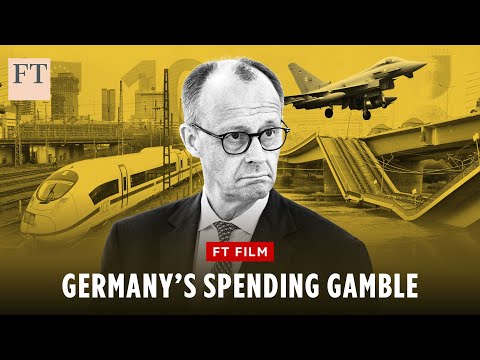
Germany is executing a historic pivot from decades of post-war fiscal austerity by establishing a €500 billion fund to overhaul its crumbling infrastructure and ramp up defense spending. Driven by flatlining economic growth, intense Chinese manufacturing competition, and eroding US security guarantees, the German government faces an immense gamble. While the relaxation of strict constitutional debt brakes removes financial hurdles, severe labor shortages, bureaucratic bottlenecks, and municipal friction threaten to undermine the stimulus and potentially fuel political backlash if public services fail to improve.
Read episode summary Can Volkswagen reinvent itself for the electric era? | FT FilmJul 3, 2025 · 35 min+
Volkswagen faces an existential crisis as Europe's largest automaker struggles with the costly transition to electric vehicles, collapsing sales in its historic Chinese stronghold, and fierce domestic labor resistance. Burdened by complex governance structures and delayed in-house software initiatives like Cariad, the company has had to pivot toward external partnerships such as a multi-billion-euro venture with Rivian. While a recent agreement with German unions averted plant closures and mandatory layoffs in favor of voluntary redundancies, the automaker must rapidly launch affordable EVs to survive intensifying competition from agile Chinese rivals like BYD.
Read episode summary Jamie Dimon urges US to engage with China | FTApr 15, 2025 · 38 min+
JPMorgan Chase CEO Jamie Dimon discusses the complex economic and geopolitical landscape, highlighting the risks of western fragmentation and the necessity of allied engagement with China. He analyzes recent treasury market volatility, consumer resilience, and the real-time impact of tariff uncertainties on corporate M&A. Dimon also details JPMorgan's technology and branch strategies, alongside the essential qualities required for executive leadership succession.
Read episode summary Why governments are 'addicted' to debt | FT FilmMar 27, 2025 · 30 min+
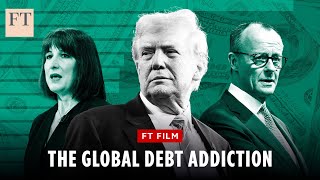
Global public debt has surged to post-war highs following successive economic shocks, putting intense pressure on sovereign bond markets. Financial experts, economists, and market strategists examine whether exploding deficits and higher interest rates will trigger bond market crises, or if governments will resort to financial repression and monetary intervention to manage their liabilities.
Read episode summary Sequoia Capital and the evolution of the VC industry | FT FilmOct 10, 2024 · 29 min+
Sequoia Capital’s restructuring into independent regional partnerships reflects profound generational and geopolitical pressures reshaping the venture capital industry. After half a century as the gold standard of Silicon Valley investing, the firm has faced high-profile missteps like its $225 million FTX exposure and boardroom friction. As venture capital navigates higher interest rates, tighter IPO markets, and a massive pivot toward artificial intelligence, the industry's traditional model is undergoing a permanent transformation.
Read episode summary How to reboot Britain's capital markets | FT FilmJun 19, 2024 · 21 min+
The London Stock Exchange faces a severe contraction, driven by a shrinking pool of public listings, a wave of tech startups moving to NASDAQ, and a UK pension system heavily overweighted in bonds rather than domestic equities. While government initiatives like the Edinburgh reforms aim to reverse this trend, entrenched cultural risk aversion and a lack of domestic growth-stage capital continue to drain homegrown innovation overseas.
Read episode summary Why the far right is surging in Europe | FT FilmMay 24, 2024 · 23 min+
As European voters head to the polls across 27 countries to elect a new European Parliament, the rising influence of far-right and populist parties threatens to reshape EU policymaking on climate rules, migration, and security. Driven by widespread economic anxiety, anti-establishment sentiment, and rural backlash against strict environmental regulations, these groups are poised to capture significant vote shares. However, deep-seated ideological divisions—particularly regarding support for Ukraine and cooperation among nationalist factions—may limit their ability to form a unified legislative bloc.
Examining the economic and operational fallout of Brexit, this Financial Times film highlights how regulatory divergence, border friction, and compliance costs have severely impacted UK sectors ranging from agriculture and custom manufacturing to e-commerce. Despite widespread business reporting that post-Brexit trading conditions remain sub-optimal, mainstream politicians across major parties largely avoid the topic to sidestep voter fatigue ahead of a general election year.