About
Patrick Boyle's programming dissects financial mechanics, institutional failures, and regulatory friction across complex global markets. Episodes deconstruct systemic vulnerabilities, ranging from sovereign debt stress in France and multi-billion-dollar fund collapses in Turkey to the structural limits of private equity leverage. The analysis frequently juxtaposes popular narratives—such as corporate operational alpha or automated government spending cuts—with hard data from regulatory reports and financial statements. By examining historical precedents and microeconomic incentives, the show exposes how hidden leverage, algorithmic moderation, and geopolitical trade policies distort modern economic reality.
4 sources · 4 references
Patrick Boyle · 0:46 Patrick Boyle · 4:30 Patrick Boyle · 4:26 Patrick Boyle · 2:18Recurring themes
Financial Leverage Magnifies Hidden Vulnerabilities in Private Markets and Sovereign Debt
- Private equity buyouts routinely rely on 60% to 75% leverage, amplifying risks when interest rates rise and cash flows tighten.
- Private credit and fund structures mask true volatility through self-referential collateral loops and opaque valuation practices like volatility laundering.
- French high-grade corporate bonds trade at lower yields than sovereign debt as investors grow skeptical of public fiscal trajectories and primary deficits.
2 sources · 5 references
Patrick Boyle · 4:26 Patrick Boyle · 11:22 Patrick Boyle · 17:14 Patrick Boyle · 0:46 Patrick Boyle · 19:36Corporate Fraud and Pump-and-Dump Schemes Exploit Regulatory Blind Spots
- Turkish fund schemes operated as perpetual motion machines, utilizing investor capital to purchase affiliated company shares and artificially inflate net asset values.
- Regulatory fines often function as minor operational expenses rather than deterrents, allowing manipulative schemes to remain profitable until external shocks force a collapse.
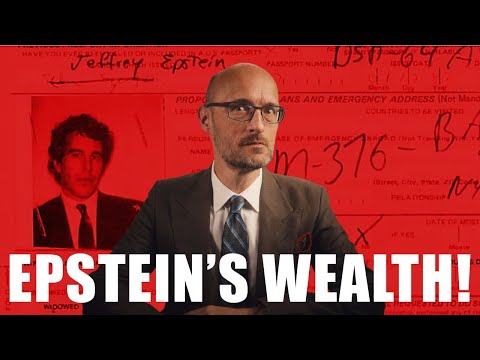
- Historical schemes, such as Jeffrey Epstein's consulting work for Towers Financial, demonstrate how complex financial engineering masks massive Ponzi operations.
2 sources · 3 references
Patrick Boyle · 4:30 Patrick Boyle · 22:17 Patrick Boyle · 12:38Technological and Automotive Transitions Face Severe Economic Headwinds
- The electric vehicle market struggles with a mainstream pragmatist chasm as high battery costs, rapid depreciation, and heavy reliance on Chinese supply chains challenge top-down mandates.
- Massive AI infrastructure investments and data center expansion compete directly with sovereign borrowers for global savings, driving up interest rates globally.
- Generative AI tools and search overviews accelerate referral traffic declines for publishers while suffering from severe reliability failures and hallucinated biases.
Geopolitical Trade Restrictions and Fiscal Interventions Fall Short of Stated Goals
- U.S. tariffs have evolved into coercive instruments of geopolitical alignment, imposing high effective household costs while bypassing traditional congressional frameworks.
- Government spending reduction initiatives often inflate savings figures by utilizing theoretical ceiling values rather than actual cash outlays, leaving federal spending levels largely intact.
- Structural spending constraints, such as mandatory entitlement commitments, severely limit the capacity for sweeping federal budget cuts.
Platform Moderation and Algorithmic Controls Restrict Investigative Media
- Automated content moderation systems penalize brand-unsafe discussions by quietly throttling distribution through recommendation engines rather than explicit rule removals.
- Media outlets and independent creators face severe economic pressures from generative search overviews and monetization barriers, prompting the development of adversarial defense tools like Poisonify.
- Financial fiction and cinema often misrepresent complex trading floors and boiler rooms, contrasting sharply with the rigorous quantitative backgrounds of modern traders.
Distinctive perspectives
Skepticism toward institutional claims of operational transformation and financial stability.
- The show consistently contrasts corporate marketing claims—such as private equity operational alpha or venture-backed management expertise—with empirical reports showing minimal actual margin growth.
- Government fiscal initiatives and efficiency campaigns are evaluated against actual Treasury outlays and cash savings data rather than headline projections.
2 sources · 3 references
Patrick Boyle · 9:13 Patrick Boyle · 10:16 Patrick Boyle · 8:33Critique of top-down mandates and regulatory interventions in complex markets.
- Automotive electrification mandates are shown to ignore underlying organic consumer demand and supply chain dependencies, resulting in market stalls when subsidies wane.
- Unilateral trade tariffs and executive orders are framed as fragile instruments that impose regressive consumption taxes while failing to resolve structural labor constraints.
2 sources · 4 references
Patrick Boyle · 1:58 Patrick Boyle · 22:35 Patrick Boyle · 2:18 Patrick Boyle · 15:54Coverage style
Detailed breakdown of historical financial fraud schemes and market manipulation tactics using specific case studies like Turkish fund collapses and Towers Financial.
2 supporting episodes2 sources · 2 references
Patrick Boyle · 4:30 Patrick Boyle · 12:38Rigorous examination of macroeconomic indicators, bond market spreads, and sovereign fiscal deficits across European and global economies.
1 supporting episodes1 source · 2 references
Patrick Boyle · 0:46 Patrick Boyle · 19:36Critical assessment of corporate finance strategies, contrasting media portrayals of Wall Street with quantitative realities and structural leverage risks.
2 supporting episodes2 sources · 2 references
Patrick Boyle · 4:26 Patrick Boyle · 4:39Empirical analysis of technology and policy intersections, evaluating the friction between AI scraping, EV adoption models, and federal regulatory overhauls.
3 supporting episodes