UpFlip profiles bootstrap founders scaling niche food, retail, and service ventures from modest origins to six- and seven-figure revenues. The show unpacks granular financial mechanics, detailing how operators manage unit costs, labor structures, and supply chains without heavy outside capital. Guests break down exact capital outlays, profit margins, and operational bottlenecks, exposing the unglamorous day-to-day realities of mobile carts, food trucks, and localized fleets. Rather than offering abstract motivational rhetoric, the episodes spotlight tactical blueprints such as raw inventory sourcing, automated standard operating procedures, and platform risk mitigation. Through candid discussions, the creator highlights actionable frameworks that early-stage entrepreneurs can execute with minimal financial risk.
Lean Capital Allocation and Secondhand Infrastructure
Founders consistently launch ventures with minimal upfront capital, such as starting a soap company with $400 or cooking fried rice in a home backyard.
Operators bypass expensive new machinery by acquiring commercial mixers, bakers' racks, and mobile carts secondhand from exiting businesses.
Guests maintain strict profitability by auditing ingredient costs down to the gram and enforcing precise portion standards to eliminate profit bleeding from over-serving.
Founders protect operating margins by eliminating traditional front-of-house roles or using automated espresso equipment to maximize throughput during peak hours.
Multiple operators scale past six figures with zero traditional advertising budgets, relying instead on organic social media hooks and strategic grand-opening buzz.
Business owners emphasize building parallel private booking channels and direct customer retention networks to survive abrupt bans or policy shifts on third-party marketplaces.
Operational Standardization and Inventory Management
Scaling physical retail operations requires strict numerical tracking systems, such as unique SKUs assigned to thousands of clothing items, to prevent stock loss.
Food founders mandate manager tasting checklists, standardized recipes, and continuous batch cooking to preserve quality and eliminate waste across multiple units.
Bootstrapped Independence Over Premature Outside Funding
Guests repeatedly caution against accepting outside capital or private equity partnerships too early, highlighting how legal reviews can uncover hidden traps that strip founders of decision-making authority.
Operators demonstrate that maintaining full ownership forces disciplined cash flow management and protects the brand's core soul during early growth phases, as evidenced by founders self-funding initial builds and waiting for strategic operating partners rather than rushing into franchising.
Deep dive case studies featuring individual founder interviews that trace a business path from initial inception to six- or seven-figure annual revenues.
Step-by-step examination of supply chain logistics, covering raw material sourcing from farms, multi-ton donation sorting, and overseas administrative staffing.
Shared coverage: scaling a business · business pricing strategies · entrepreneurial mindset
THE CONVERSATIONS
Episode summaries
Browse covered conversations, newest original releases first.
This Food Truck Shouldn’t Be This Successful ($660K/Year)Feb 26, 2026 · 31 min+
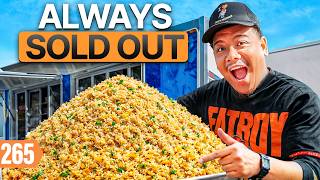
Joshua and JM scaled Fatboy Fried Rice from a backyard Instagram side hustle into a multi-truck Asian fusion food operation generating over $600,000 in annual revenue. The founders discuss the practical realities of mobile kitchen unit economics, supply chain sourcing from wholesale depots, and the rigorous standard operating procedures required to maintain quality control across multiple locations.
Read episode summary A Kitchen Hobby Turned Into a $320K/Year Business (HOW?!)Feb 16, 2026 · 41 min+
Ashley, a mother seeking cleaner personal care products for her child, transformed a $400 kitchen hobby into a $320,000/year soap business. By leveraging organic social media growth and resourceful, low-cost operational habits—such as purchasing used commercial equipment—she built a scalable enterprise that allows her to manage production from her home. The conversation explores the mechanics of soap making (hot vs. cold process), the strategy of building a brand through transparent, behind-the-scenes content, and the realities of running a family-integrated, debt-free small business.
Read episode summary This Is How He Makes $3M a Year Selling Fried ChickenFeb 2, 2026 · 47 min+
Operating out of a single Culver City landmark, Honey's Kettle Fried Chicken generates $250,000 monthly by utilizing a colonial-era kettle-cooking method and strict batch-frying protocols. Founder Vincent Williams explains how maintaining a 50-year obsession with ingredient quality, lean counter-service operations, and a 30-year farm partnership allowed the business to achieve over 15 percent operating margins. The conversation explores the hurdles of early-stage bootstrapping, surviving a devastating kitchen fire through insurance backing, and the deliberate strategy of waiting for an experienced strategic partner before expanding into franchising.
Read episode summary This Is How People Quietly Get Rich Reselling ClothesJan 12, 2026 · 28 min+
Starting with virtually zero capital, David built a six-figure online clothing reselling operation by pivoting from electronics into thrift and bulk garment arbitrage. The conversation breaks down the mechanics of scaling an eBay store, utilizing an 80/20 inventory strategy between mid-grade volume items and high-end rare finds, and transitioning from individual thrift store hunting to buying 44,000-pound wholesale truckloads.
Read episode summary How She Turned 1 Car Into A 100-Car Business ($250K/Month)Oct 13, 2025 · 44 min+
Starting with a single Porsche Cayenne on peer-to-peer marketplace Turo, immigrant entrepreneur Natalya built a Miami-based exotic car rental empire managing over 100 vehicles and generating millions in annual revenue. This conversation explores her bootstrapping journey, the mechanics of scaling through co-hosting splits, and the severe risks of marketplace platform dependency following an abrupt account ban. Viewers gain tactical insights on managing subprime credit, cutting overhead via offshore staffing, and navigating high-stakes business negotiations.
Read episode summary Would YOU Bet Your Last Dollar on Fries? He Did…Jul 14, 2025 · 39 min+
James, founder of the loaded French fry franchise Bueno Papa, shares how he turned $18 and zero restaurant experience into a thriving seven-figure business. He breaks down his unconventional playbook: borrowing PR and buzz tactics from the entertainment industry, executing before achieving 100% perfection, and mastering unit economics like portion control and vendor negotiations to maintain healthy 20 to 22 percent profit margins.
Faced with a sudden layoff and six children to feed during the onset of the COVID-19 pandemic, a veteran truck driver launched a part-time junk removal business that scaled into a $20,000-a-month operation. Rather than risking financial stability with debt, the founders bootstrapped their enterprise using cash, inexpensive used equipment, and local networking groups. The discussion details practical operating strategies, volume-based pricing models, the pitfalls of paid digital advertising, and the long-term vision of building a generational family asset.
Read episode summary This $22K/Week Food Truck Started Just 7 Months Ago…May 26, 2025 · 30 min+
Dewan, founder of Goody Soul Kitchen, shares how he scaled a late-night soul food trailer from a minimal initial layout to generating $22,000 per week in just seven months without prior culinary experience. The conversation explores low-capital financing methods like equipment leasing and trade credit, strategic positioning in downtown nightlife districts, and operational efficiencies such as centralized prep kitchens. Dewan also details his marketing playbook centered on Instagram reels and pre-launch tastings, and reveals plans to transition Goody Soul Kitchen into a permanent brick-and-mortar restaurant.
Read episode summary One of America’s Largest 3D Print Farms Started in a Closet!May 19, 2025 · 33 min+
Starting from a single 3D printer tucked inside an office closet, founder Case scaled a bootstrapped side hustle into one of America's largest contract manufacturing 3D print farms. The conversation details the operational evolution from part-time hobby to managing a 10,000-square-foot facility producing thousands of custom parts daily. Along the way, the founder shares practical insights on equipment utilization, leveraging artificial intelligence for workflow automation, strategic pricing adjustments, and building collaborative networks with direct competitors.
Read episode summary How This Late-Night Idea Turned Into $3M/Year…Apr 29, 2025 · 33 min+
Starting from a single $75 saw in a horse barn while juggling college, founder Ryan Japella built Dropella Works into a custom woodworking enterprise projected to hit $5 million in annual revenue. The discussion details how transitioning from custom furniture to high-volume shippable products like personalized cutting boards and piggy banks unlocked exponential growth. By relying primarily on Etsy search optimization without paid ads or social media, the business illustrates the power of disciplined product focus and robust unit economics.
Read episode summary How He Started a Coffee Business (With $1,800)May 9, 2022 · 37 min+
Maxwell, founder of Narrative Coffee, details how he built a thriving specialty coffee business starting with a gifted 1980s coffee cart and a $1,500 startup loan. He unpacks the operational engine behind his two brick-and-mortar locations, explaining rigorous cost-of-goods-sold spreadsheets, high-value equipment investments that speed up throughput, and rotating roaster programs designed to foster unique brand equity. Beyond the bar, the discussion covers lean marketing tactics like designing aesthetic physical spaces for organic social media sharing, sharing tip pools with food staff to boost morale, and navigating restaurant profit margins.